








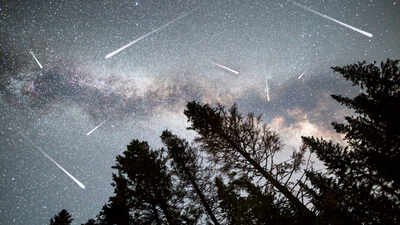
The Perseid meteor shower is back, and this year, skywatchers in the US have a particularly good reason to look up. The annual meteor shower reaches its peak overnight on August 12 into the early hours of August 13, with the timing lining up with a new Moon. That means there’ll be little to no moonlight washing out the fainter meteors.NASA has called the Perseids one of the year’s major skywatching events, and the American Meteor Society says rural observers can typically expect around 30 to 50 meteors an hour at the peak. Under ideal conditions, the shower’s theoretical rate can reach around 100 meteors per hour.So, if you’ve been waiting for a reason to step outside after midnight, this could be it.
What is the Perseid meteor shower?
A meteor shower happens when Earth moves through a trail of dust and debris left behind by a comet or asteroid. When those tiny particles hit Earth’s atmosphere at high speed, they heat up and burn, creating the bright streaks we see as shooting stars.The Perseids come from debris left behind by Comet 109P/Swift-Tuttle. The comet has a nucleus roughly 26 kilometres (16 miles) across and takes about 133 years to orbit the Sun. NASA says astronomers identified Swift-Tuttle as the source of the Perseids in the 19th century.The shower gets its name from the constellation Perseus, because the meteors appear to radiate from a point in that part of the sky.The Perseids are active for several weeks, but the peak is when the show really picks up. In 2026, the American Meteor Society lists the active period as July 17 to August 24, with maximum activity around August 12-13.
When is the best time to watch the Perseids?
Although you may spot a few meteors earlier in the evening, your best chance comes after midnight and into the pre-dawn hours.That’s because the Perseid radiant climbs higher in the northeastern sky as the night goes on. The American Meteor Society says the shower is best placed during the final dark hour before dawn, when the radiant is highest.And this year’s new Moon is a big advantage. The Moon will be essentially dark during the peak, leaving the sky much darker than it would be during a bright lunar phase. NASA says this should provide excellent viewing opportunities, weather permitting.You don’t need a telescope, either. In fact, your eyes are probably the easiest way to take in the whole display.Find a dark spot away from streetlights and buildings, give your eyes some time to adjust and look towards a wide stretch of sky. A reclining chair or blanket can make the wait much more comfortable.
Best places in the US to see the Perseids
The darker the sky, the better your chances. City lights can drown out many of the fainter meteors, so heading to a recognised dark-sky location can make a noticeable difference.Great Basin National Park, NevadaGreat Basin is a strong choice for anyone looking for genuinely dark skies. Its remote location and high elevation around Wheeler Peak offer broad, unobstructed views of the night sky.Death Valley National Park, CaliforniaDeath Valley is another favourite for stargazers. With extremely dark skies and wide-open landscapes, there are few things around to interfere with your view. Dante’s View and Badwater Basin are among the better-known viewing areas.Zion National Park, UtahZion may have somewhat more light pollution than the most remote desert parks, but it’s still a great option if you want to turn meteor watching into a bigger trip. The park also hosts astronomy and stargazing programmes at different times of the year.Big Bend National Park, TexasBig Bend’s remote location is exactly what makes it so good for watching meteors. There’s very little artificial light, and the vast landscape gives you plenty of open sky to work with.Great Sand Dunes National Park, ColoradoImagine watching meteors streak across the sky while sitting among enormous sand dunes. That’s part of the appeal of Great Sand Dunes. The park has been recognised for its dark skies, making it a particularly memorable place to watch the Perseids.Cherry Springs State Park, PennsylvaniaFor viewers on the East Coast, Cherry Springs is one of the best-known dark-sky spots in the region. You don’t have to travel all the way to the western deserts for a spectacular night under the stars.
A few simple tips before you head out
You won’t need fancy equipment. Get away from bright lights, give yourself plenty of time outside and avoid constantly checking your phone, since the screen can make it harder for your eyes to adjust to the darkness.And don’t worry about finding the exact spot where the meteors appear to originate. Perseids can flash across a large section of the sky. Lying back and looking at as much sky as possible is usually a better strategy than staring at one small patch.The weather will still make the final call. Even the darkest location won’t help if clouds roll in.But if skies are clear, the night of August 12 into August 13 could be one of the better opportunities of 2026 to watch the Perseids. With a new Moon removing much of the usual glare, all that’s really left to do is find a dark place, look up and wait for the first streak of light.