








Optical illusions have tricked people’s brains for centuries, as they don’t simply record the world as it is; they interpret it by filling in gaps, making assumptions, and developing a perspective based on patterns we’ve learned since childhood.When you look at an image, your eyes send raw visual data to the brain, but the brain doesn’t wait for the full picture before deciding what it’s looking at. It jumps ahead, guessing based on shading, contours, and familiar shapes, often concluding one interpretation before you’ve even had time to think consciously about it.

Photo: Credit: X/DrDarrenRFlower
Perhaps that is why optical illusions trick the brain, and no two people can stare at the exact same image and see the same things at once; this gives a peek into their personalities as well.This time, an image of a landscape comes up, but what we see first tells a lot about us!Let’s dig in to find out
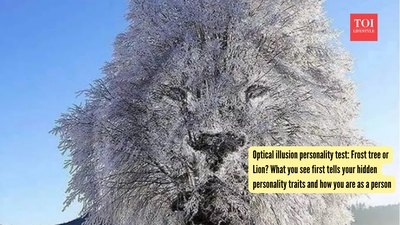
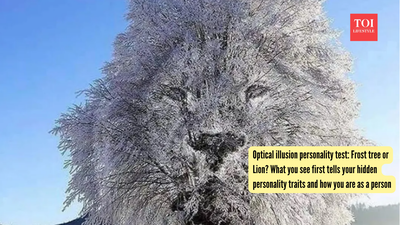
A frost-covered branch or lion face?
The illusion shows a frost-covered tree whose branches, at certain angles, also form the face of a male lion. Shared by Mia Yilin claimed to reveal insights about your personality traits based on psychology, according to a SUN report.Some viewers spot the tree instantly, others the lion, and that split-second difference is exactly what the trend has built itself around.

Photo: Credit: X/DrDarrenRFlower
What does it mean if you spot the tree first?
Yilin suggests that tree-spotters can come across as distant when first meeting people, though that tends to soften over time. In relationships, she says, they avoid chasing others and prefer letting a potential partner take the first step. However, once they do commit, they tend to fully invest themselves, sticking by that person regardless of outside opinions or pressure from others.
What seeing the lion first is said to reveal
Lion-spotters, according to Yilin, tend to be outgoing, easy-going, and generally avoid unnecessary conflict, often letting others have their way to keep the peace. She describes them as dependable, well-liked, and resilient, with many people wanting to be their friend. She also frames them as ambitious, forward-planning individuals, closing her breakdown by calling them, in her words, a genuinely “powerful person.“
The psychology behind the craze
These illusion-based personality tests are not rigorously based on science, and psychologists don’t treat them as reliable measures of what, who someone really is. Still, they for once give a lighthearted excuse for people to pause, reflect on their own traits, and maybe even learn something small and surprising about themselves.