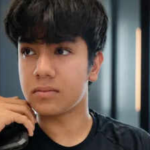






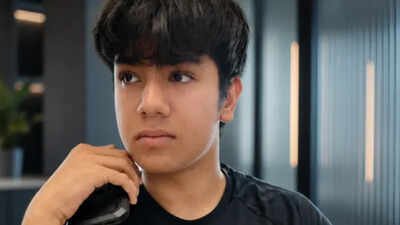
A 14-year-old Indian-American student from Pennsylvania has won a $1,000 national writing prize for a historical-fiction story set in a Philadelphia print shop on July 4, 1776. Aryash Shyam, a ninth-grade student at Lehigh Valley Academy, was named one of four middle-school winners of the 2026 John Estey Student Writing Competition, organised by the American Writers Museum in Chicago.His winning story, The Weight of Lead, follows a young printer’s apprentice working on the Declaration of Independence. Through the experience of a 13-year-old boy, Aryash explores the difference between the promise of equality in the declaration and the reality faced by people who were not given the same freedoms.The American Writers Museum has published his story as part of the competition. According to a report by The American Bazaar, the award is among several achievements Aryash has earned in writing, science and technology. His work includes research proposals related to gene editing in space, a robotic system designed to remove invasive plants and a radio programme in which he interviews scientists.Growing up in Pennsylvania’s Lehigh Valley, Aryash developed an interest in understanding how things worked. “I always found myself paying attention to how everyday things work,” he told The American Bazaar. “I spent a lot of time reading on my own and noticing the details of the world around me, simply out of natural curiosity,” he added.
The award-winning story
The Weight of Leadtakes readers to Philadelphia on July 4, 1776, when the United States declared its independence from Britain. Its central character, Will, is a 13-year-old apprentice helping arrange the metal letters used to print the Declaration of Independence.As Will works with the lead letters, he begins thinking about the declaration’s statement that “all men are created equal”. He also becomes aware of another boy whose chances of enjoying freedom are very different from his own.Through this contrast, the story examines how the idea of equality existed alongside a society in which those rights were not available to everyone.The recognition adds to Aryash’s achievements in other writing competitions. All three essays he submitted to the 2026 John Locke Institute Global Essay Prize, covering economics, philosophy, and science and technology, were shortlisted.
Aryash’s interest in science and space
Beyond historical fiction, Aryash has worked on scientific ideas involving gene editing and space research. Earlier in 2026, he received a Genes in Space Junior Scientist Award for a proposal examining whether a CRISPR-based diagnostic system could operate in microgravity.His project, titled Validating a Cell-Free CRISPR Fluorescent RNA Diagnostic in Microgravity, studies whether a freeze-dried CRISPR-Cas13 system could be activated using water and produce a fluorescent signal when specific RNA is detected.CRISPR-Cas13 is a technology that can recognise particular RNA sequences. Aryash’s proposal examines whether such a system could work in the low-gravity conditions experienced during spaceflight.The idea could have applications in monitoring astronauts’ health and developing diagnostic tests for locations on Earth where medical resources are limited.Aryash was among five Junior Scientist Award recipients selected from 130 submissions by students in grades seven and eight across the United States.
From medical research to robotics
In September 2026, Aryash also secured first place in the high-school category of the American National Standards Institute Student Paper Competition.His paper, Designing Out Error: How ISO 80369 Turned a Deadly Universal Connector into a Life-Saving Standard, examined how safety standards for medical tubing connectors can help prevent dangerous mistakes.The subject was connected to his experience as a surgical patient at Children’s Hospital of Philadelphia. His paper explained how designing connectors that cannot fit incompatible medical systems can reduce the risk of incorrect connections.Aryash has also developed GreenBeam, an artificial intelligence-powered robotic system intended to identify and remove invasive plants without routinely using chemical herbicides.“I kept coming back to a problem that seemed solvable,” he said. “Invasive plant species, plants that spread aggressively outside their native range, are typically removed using chemical herbicides that can damage surrounding ecosystems. I wanted to find a better way.”GreenBeam combines computer vision, which allows software to recognise plants through images, with a precision laser designed to target unwanted plants.Aryash developed the system using Python and trained it with plant images. The project earned him Pennsylvania State Merit recognition in the 2025 3M Young Scientist Challenge.
Aryash also hosts a science radio programme
Aryash’s interest in science extends to explaining research to others. He hosts Teen Scientist, a monthly programme on WDIY 88.1 FM, Lehigh Valley Public Radio, where he interviews researchers working in artificial intelligence, biotechnology, mathematics, space and climate innovation.He has also produced Editing Humanity: A CRISPR Conundrum, a documentary exploring the science and ethical questions surrounding gene editing.Another of his initiatives is RacingGecko, a STEM-learning platform intended to help younger students understand mathematics, coding and artificial intelligence.“I believe students learn better from peers who remember what it felt like to not understand something yet,” Aryash said.