








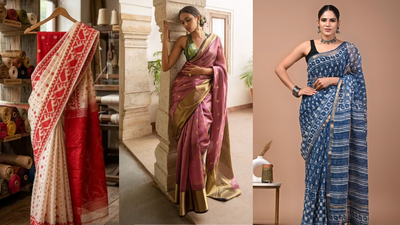
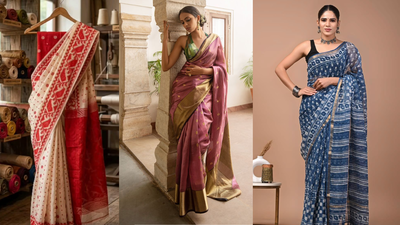
If you enjoy wearing light, airy, and posh sarees in summer, you must be familiar with Indian sarees such as Jamdani, Chanderi, and Kota Doria. All these sarees share a lightweight nature and are known for their sheerness, featuring simple designs that pair well with minimal styling. As you can conclude, they all belong to the same category of sarees, but that is where their similarities end. Let’s understand the differences between these three weaves.JamdaniJamdani is one of the most celebrated textile traditions within the country’s hand-woven crafts, with historical roots in Bengal, especially the region around Dhaka, Bangladesh. The name is believed to come from Persian words, while the textile and the process became a highly engineered art of back-figured muslin weaving.
(Image Credits: Pinterest)
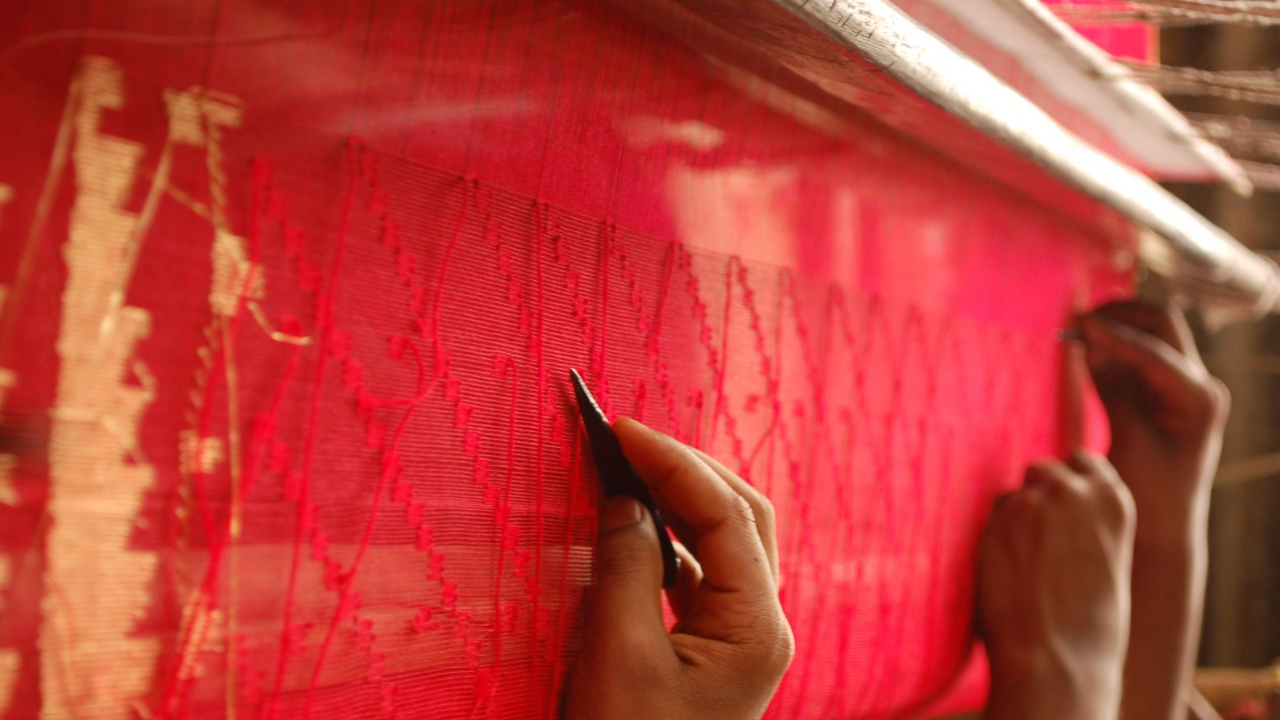
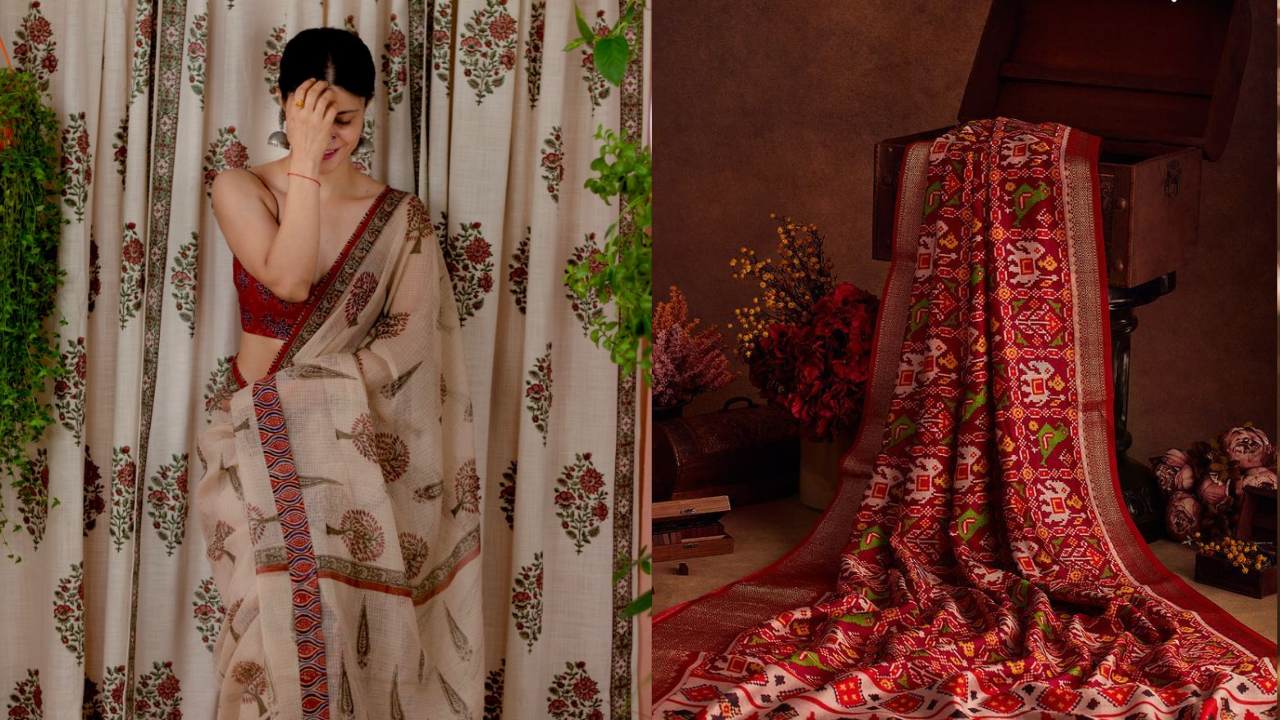
What makes Jamdani so special is its technique, known as the supplementary-weft technique. Instead of weaving a fabric with only one thread, the weaver uses extra threads added manually to obtain patterns. Motifs can include flowers, leaves, geometric shapes, or well-known butidar designs. As a result, the fabric can look weightless despite having very complex and interesting patterns, where the motifs are woven into the fabric and cannot be seen as a decorative element.Chanderi When it comes to Jamdani, the theme revolves around patterns, but when we talk about Chanderi, it is all about the lightness, beauty, and transparency of the fabric. Chanderi weaving originates from Chanderi, Madhya Pradesh, a place of great historical significance whose architecture is rooted in weaving. The main feature is the textile’s weightless nature, along with being incredibly elegant.Traditional Chanderi cloth could feature different combinations of cotton and silk, for instance, silk warp and cotton weft. In modern versions, pure cotton or pure silk fabrics are possible. One of Chanderi’s most striking traits is that its surface shimmers with a shining quality and is transparent. And, then there is the work of Zari.Kota DoriaKota Doria is a textile so meticulously made that it seems to have been designed mathematically. Hailing from Kota, Rajasthan, Kota Doria is renowned for its lightweight and unique fabric structure with its famous small checks called khat. The tiny squares emerge from a blend of cotton and silk yarns used in the weaving process. This technique produces a textile that is extraordinarily light, airy, and breathable. Moreover, the fabric is breathable and suits the hot and humid weather of India excellently.
(Image Credits: Pinterest)
Final verdictAlthough all three types of light sarees are similar in some sense, they all have their characteristics. While Jamdani sarees add style, Chanderi is associated with elegance. In addition, Kota Doria drapes are a perfect solution for a hot summer day in India. This is precisely the reason why our country’s handloom heritage is so great, as it is impossible to imagine a more perfect example of luxury.