


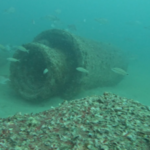





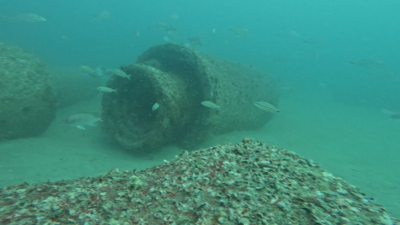
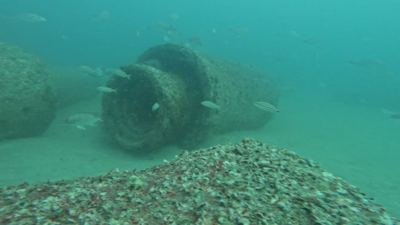
What was once considered industrial waste is now set to become an underwater habitat for marine life off Florida’s coast. Crews have repurposed approximately 150 tons of discarded concrete and steel, including old pipes and junction boxes, and deployed the material on the Gulf seabed near Panama City Beach to create a new artificial reef. The project, carried out in March 2026, is part of the region’s ongoing efforts to expand marine habitats while finding productive uses for materials that would otherwise be discarded. According to local broadcaster WJHG/WECP, the structures were lowered around 70 feet underwater at a permitted site southwest of St. Andrews Pass. The Florida Fish and Wildlife Conservation Commission (FWC) and the University of Florida’s IFAS Extension have also documented the wider artificial reef programme and its ecological benefits. Scroll down to read more.
From discarded construction material to underwater habitat
The materials used in the project were originally destined for a landfill. They included concrete pipes, junction boxes and other industrial components that were no longer needed for their original purpose. Instead of sending them to waste facilities, the project team decided to give them a second life beneath the water.Before deployment, the material was cleaned and prepared to ensure it met environmental requirements for use as an artificial reef. The structures were then transported offshore and lowered onto the seabed at a permitted location approximately 6.08 nautical miles southwest of St. Andrews Pass.The Florida Fish and Wildlife Conservation Commission’s deployment records identify the March 19 installation as RESTORE Rubble 9 and 10. Its records list 159 tons of secondary-use concrete at a depth of approximately 72 feet, providing a more precise figure for the deployment.
How artificial reefs help marine life
Artificial reefs are designed to provide underwater structures in areas where natural hard-bottom habitats may be limited. Once established, they offer surfaces where algae, sponges, corals and other marine organisms can attach and grow. These organisms gradually help create a food-rich environment, attracting smaller fish and invertebrates. Larger species can then use the structures for shelter, feeding and breeding.According to the University of Florida’s Institute of Food and Agricultural Sciences, secondary-use concrete pipes and culverts can be arranged to create different spaces and openings, increasing habitat complexity for marine animals. Over time, these structures can support a wider range of marine life, from small crustaceans to larger fish. The new installation is expected to follow a similar process. Project organisers anticipate that marine organisms will begin colonising the material within the first year, gradually establishing a functioning underwater habitat.
A boost for fishing and diving
The project is also expected to benefit people who visit Panama City Beach for recreational activities. Artificial reefs attract fish and create additional locations for anglers, while divers can explore the developing underwater structures. Florida already has an extensive artificial reef network. The FWC reports that thousands of artificial reefs have been established in state and federal waters, providing habitat for marine species while supporting recreational fishing, diving and coastal economies.Concrete and steel are among the commonly used materials because they can provide durable structures when properly prepared, positioned and secured. Their deployment is subject to environmental and permitting requirements to ensure they are suitable for long-term use underwater.For Erin Graham, the artificial reef coordinator and coastal resource manager involved in the Panama City Beach programme, the work also has a personal connection. Having grown up fishing and diving, she sees the project as a way to create more opportunities for marine life as well as for people who enjoy spending time on the water. The latest deployment adds to Panama City Beach’s expanding artificial reef programme, demonstrating how discarded industrial materials can be repurposed into structures that support marine habitats and provide new recreational opportunities.