







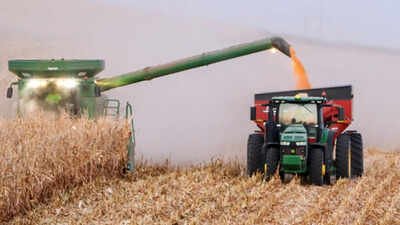
A piece of farmland donated to a small Texas school district more than four decades ago is now helping hundreds of students pay for higher education. In Gruver, a town in the Texas Panhandle, local farmers volunteer their time, machinery and farming skills to grow crops on 640 acres of donated land. The harvests generate approximately $400,000 annually for scholarships. Since the programme began awarding money in 2016, nearly $3 million has reportedly reached around 300 students.According to Texas Today, the initiative began with a decision made by Karl Nielsen, a Danish immigrant who settled in Gruver in 1901. Nielsen never married and spent much of his life living with his sister. He remained in the town until his death in 1984, at the age of 105. Before his death, he decided to leave 640 acres, equivalent to one square mile, to the Gruver Independent School District.For several years, the school district earned about $25,000 annually by leasing the property. The money helped purchase educational supplies, including books and science equipment. However, the land’s potential to support students remained largely unused until two local residents discussed a different approach.Around 2012, then-school superintendent David Teal and farmer Chad Logsdon discussed the property while sitting in a pickup truck at a football game. Teal believed the district could earn considerably more by farming the land instead of leasing it. He proposed using the income to help local students attend college or trade school. Logsdon supported the idea, and the Gruver Farm Scholarship Foundation was established that year.
Local farmers turn land into scholarship fund
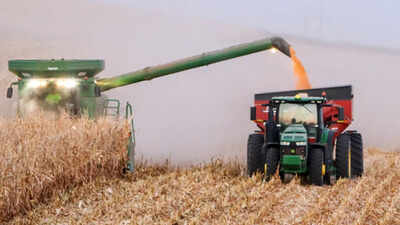
The foundation developed a system in which farmers could contribute their agricultural skills without receiving payment for their work. Each year, a lead farmer would coordinate volunteers responsible for planting, harvesting and transporting crops to market.Farmers offered their tractors, equipment, diesel and labour. Agricultural companies contributed seeds and fertilisers, while residents and local businesses provided additional financial support. Banks, insurance companies and feedlots also became involved.The arrangement meant that the foundation could use resources already available within the community rather than paying for every stage of agricultural production.The volunteers grow corn and wheat on the property. According to Texas Today, the farming operation now generates approximately $400,000 annually for scholarships.However, the foundation did not begin distributing money immediately. It spent four years building its funds, accumulating nearly $1 million before the first scholarships were awarded.
First students received scholarships in 2016
The first beneficiaries were students graduating from Gruver in 2016. That year, the foundation distributed $350,000 towards college and trade school tuition.Recipients enrolled at different institutions, including West Texas A&M University and Texas Tech University. Others pursued technical education, including diesel mechanics training at WyoTech in Laramie, Wyoming.Students qualify through a points-based system that considers more than academic performance. Their grades, extracurricular activities and community participation all contribute towards eligibility.Participation in sports, cheerleading and school bands can earn points. Students can also receive credit for activities such as theatre and debate. Community service is another consideration, with students earning points for completing 25 hours annually. Such work can include mowing lawns for elderly residents or helping arrange tables for a church picnic.Explaining the programme’s wider purpose, Gruver ISD superintendent Wade Callaway told Texas Standard, “we are growing graduates and we are growing good neighbors.”The foundation also supports further education beyond an undergraduate degree. Students who complete college within four years may qualify for assistance towards a Master’s degree. Teachers working in the district can also receive support for postgraduate studies.
Nearly $3 million awarded to around 300 students
The programme has continued to expand since its first scholarships were awarded. Texas Standard reported in November 2024 that the foundation had distributed $2.5 million to 277 students. Its report also found that 59 scholarship recipients graduated from college between 2016 and 2020, including 23 first-generation college students.More recent figures published by Texas Today in November this year put the total at nearly $3 million distributed to approximately 300 students. Individual scholarship awards can reach about $40,000.The newer report also stated that approximately 48 recipients had become first-generation college graduates. Some beneficiaries have subsequently returned to the Texas Panhandle to work in agriculture, education and healthcare, including as farmers, teachers and nurses.