









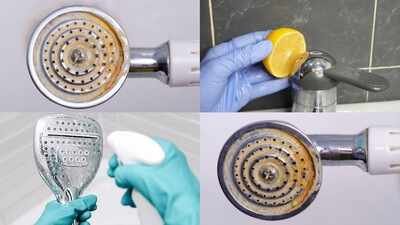
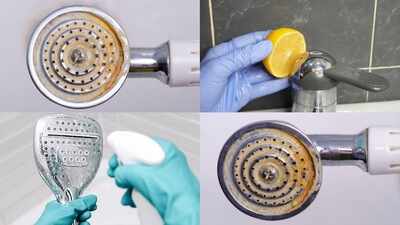
That chalky white crust creeping across your showerhead, shower glass, or tap isn’t dirt in the usual sense, it’s limescale, mineral deposits left behind once hard water evaporates, and it tends to build up fastest in exactly the areas that see water the most. It’s a genuinely universal bathroom problem, and the instinct for most people is to reach for a harsh chemical descaler the moment it gets bad enough. The good news is that a handful of natural ingredients, most of them already sitting in a kitchen cupboard, do the job just as effectively, sometimes even better, without the sharp fumes or surface damage that stronger chemical cleaners can cause. Here’s what actually works on the stubborn stuff.
Citric acid: The strongest natural option for really stubborn buildup
If vinegar and baking soda haven’t managed to shift a genuinely stubborn buildup, citric acid is worth reaching for next, and it’s quietly become the go-to recommendation among cleaning experts for exactly this reason. Mixing two to three tablespoons of citric acid powder into warm water creates a solution strong enough to dissolve even heavily calcified deposits with very little scrubbing effort. If your showerhead can be removed, submerging it fully in the solution for thirty minutes to an hour, then going over any remaining spots with an old toothbrush, usually clears even nozzles that have been fully blocked for months.
White vinegar: The classic, reliable standby
Vinegar remains a genuinely solid choice, and it’s the option most people already have on hand without needing a special trip to buy anything. For lighter limescale, a mix of equal parts white vinegar and water sprayed directly onto the affected area and left to sit for about fifteen minutes usually does the trick. For heavier, more stubborn buildup, using undiluted vinegar gives it more concentrated acidity to work with. Removable fixtures like showerheads and tap nozzles can also be fully submerged and left to soak for one to two hours for a deeper clean.
Baking soda and lemon paste: Best for glass and tile surfaces
For flatter surfaces like shower glass or tiled walls, rather than fixtures you can soak, a paste works better than a spray or soak alone. Cutting a lemon in half and dipping the cut side directly into baking soda, then rubbing it onto the worst patches, combines the citric acid with a mild abrasive texture that helps lift stubborn residue rather than just softening it. Letting the paste sit for fifteen to thirty minutes before gently scrubbing in circular motions with a soft cloth, never steel wool, which can scratch glass and chrome, gives the best results without damaging the surface underneath.
The bag trick for showerheads you can’t remove
Not every showerhead unscrews easily, and a lot of modern fixtures are built to stay fixed in place. For these, fill a sturdy plastic bag with your chosen vinegar or citric acid solution, pull it up over the showerhead so the nozzles sit fully submerged, and secure it tightly around the neck with a rubber band or string. Leaving it in place for an hour or two lets the solution work exactly as it would in a soak, without needing to detach anything, and a quick rinse afterwards washes away both the solution and the loosened deposits.
One important caution: Natural stone surfaces
This is worth knowing before reaching for any of these methods. Acidic cleaners like vinegar, lemon, and citric acid work precisely because they dissolve calcium carbonate, and that’s a problem if your bathroom has marble, limestone, or other natural stone surfaces, since those materials are themselves largely made of the same mineral. The same reaction that clears limescale off a showerhead can etch and dull natural stone, leaving permanent dull marks that don’t polish out easily. On marble floors, countertops, or stone-clad walls, stick to a plain baking soda paste instead, which cleans without the acidic reaction, or test any solution on a small, hidden area first.
Keeping limescale from coming back
Removing existing buildup matters less if the same conditions bring it right back within weeks. Wiping down taps, showerheads, and glass with a dry cloth after every use stops mineral deposits from crystallising in the first place, since it’s the evaporation of standing water that actually leaves the residue behind. In areas with genuinely hard water, a proactive clean once every two weeks, rather than waiting for visible buildup, keeps the whole routine far more manageable than tackling months of accumulated scale in one stubborn session.
Natural doesn’t mean weaker
Between citric acid’s genuine strength against heavy buildup, vinegar’s reliability for everyday maintenance, and a baking soda paste for anything acid-sensitive, there’s a natural option suited to almost every kind of limescale problem a bathroom throws up. None of it requires anything more exotic than a trip to the kitchen cupboard, and unlike a lot of commercial descalers, there’s no harsh smell left behind once you’re done.
Disclaimer:
This article is intended for general informational purposes only. Always test any cleaning solution on a small, hidden area first, and avoid using acidic cleaners like vinegar, lemon, or citric acid on natural stone surfaces such as marble or limestone. Wear gloves when handling these solutions, and ensure the bathroom is well-ventilated during use.