










Some players make football look complicated. Lionel Messi has spent twenty years making it look like the simplest game in the world.A pass arrives, and somehow it’s exactly where it needed to be. A defender closes in, and somehow the ball is already gone, slipped past him before he’s finished his stride.That’s the trick of real genius: the one who doesn’t make it look like effort; it looks like ease.Lionel Messi, the captain, the talented, the person who took his team Argentina to the highest in the FIFA 2026 World Cup, just dropped an overwhelming post on his Instagram profile, and all football fans cannot control their teary eyes.He thanked about his journey with the team Argentina across the years and thanked his teammates for the experience that he had in his career, from growing together to competing with each other.But the path to this outstanding career of the Argentine footballer has not been a bed of roses; years before anyone outside his hometown had heard his name, as a small boy, he was diagnosed with growth hormone deficiency.
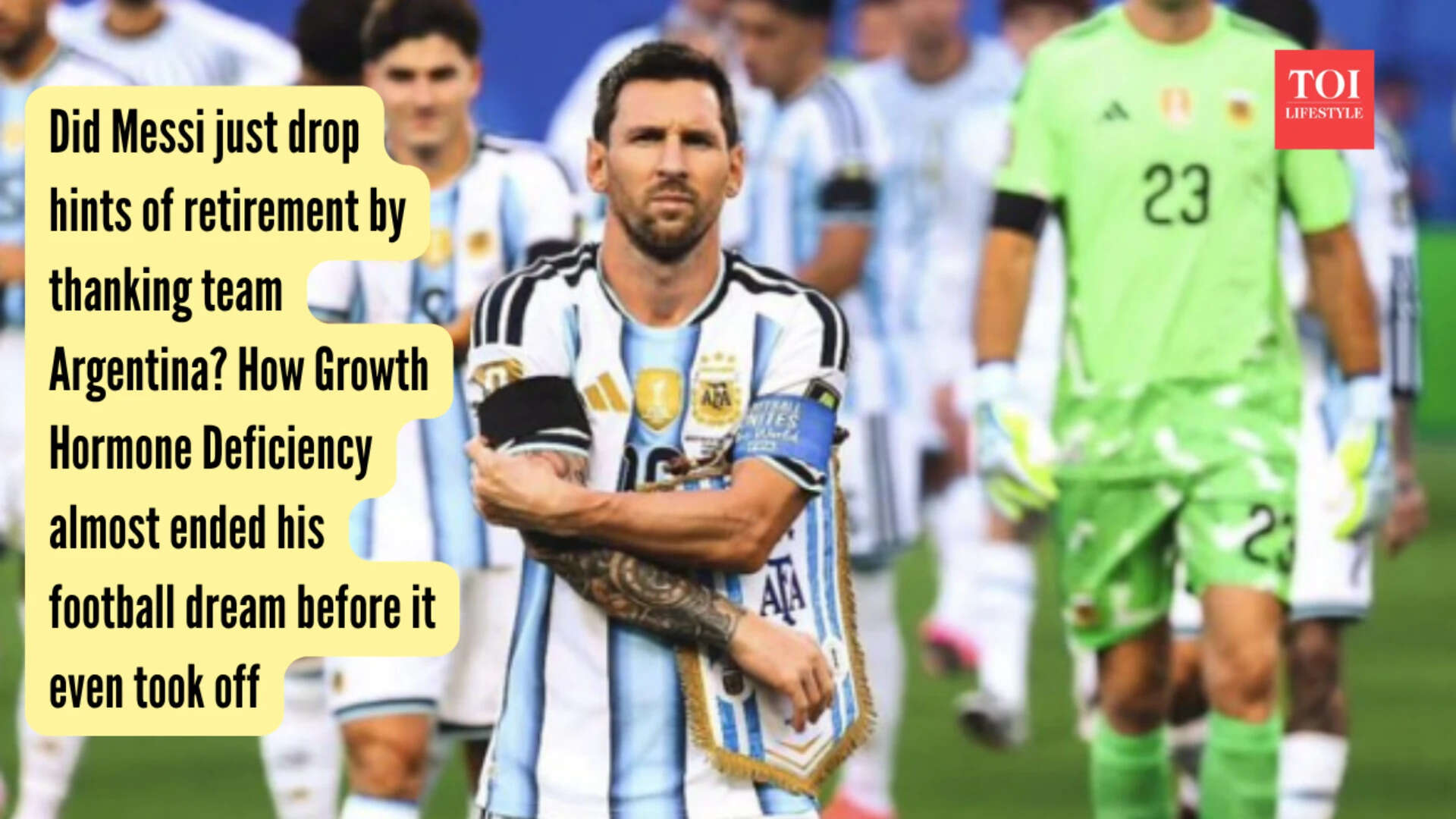
Lionel Messi (Photo: @giraltpablo/ X)
What is growth hormone deficiency?
Growth Hormone Deficiency (GHD) occurs when the pituitary gland fails to produce enough growth hormone, a chemical essential for normal development in children. If left untreated, it typically causes slower-than-average growth, noticeably short stature, delayed physical maturity, and reduced muscle and bone development.The condition affects the body’s ability to grow properly rather than any other aspect of health, and it’s diagnosed through a lengthy process of ruling out other possible causes. With early diagnosis and consistent treatment, most children go on to reach normal or near-normal adult height.
How was Messi diagnosed with growth hormone deficiency?
Messi was around 10 or 11 when doctors noticed he had barely grown in years. Dr. Diego Schwarzstein, the endocrinologist who treated him, later recalled, according to Athlon Sports, “when he was 10, he was a normal kid, just a regular kid with a growth issue.” Reaching the diagnosis wasn’t instant; the doctor described a structured process of testing to rule out other causes before confirming GHD. Once confirmed, Messi began nightly injections of synthetic growth hormone, and this routine continued for years.ID@undefined Caption not available.ID@undefined Caption not available.
FC Barcelona had a major role in helping him through his illness
The therapy was expensive, estimated at $900 to $1,000 a month, according to Bleacher Report, and Messi’s family could not sustain it alone. Newell’s Old Boys, his boyhood club in Argentina, offered partial help but not a long-term solution. In 2000, Barcelona scouts watched him trial and, the club agreed to sign him and cover the remainder of his treatment, prompting the family’s move from Rosario to Spain when Messi was 13.
Can children with GHD live normal lives?
Growth Hormone Deficiency is a well-understood condition today, not a mystery diagnosis. If diagnosed early and treated properly, most kids go on to grow normally and live healthy, active lives.Treatment usually looks like this:
- Growth hormone injections, either daily or a longer-acting version
- Regular check-ins with a pediatric endocrinologist
- Periodic tests to track growth and hormone levels over timeIn fact, Messi’s case remains one of the most widely given examples of what’s possible with timely intervention.