









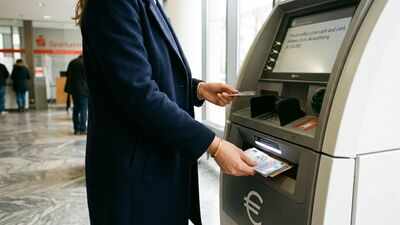
Despite the widespread use of contactless payments and smartphones across Europe, people are keeping more physical cash. The value of euro banknotes in circulation has increased sharply in recent years, as fears over war, cyber-attacks and other emergencies grow.According to European Central Bank (ECB) data, as reported by The Guardian, the total value of euro banknotes in circulation increased from about €1 trillion in 2016 to €1.6 trillion in June 2026. The number of notes has also increased, with more than 31 billion banknotes now in circulation.The increase comes at a time when cash is used less often for everyday purchases in many European cities. Contactless cards, mobile phones and other digital payment methods have become common. However, people are now keeping cash because they are worried about situations in which digital payment systems may not work.Those concerns include wars, wildfires, floods, storms and cyber-attacks. In such situations, people may not be able to depend on online banking, mobile apps or contactless payment systems. Cash, therefore, can provide a way to pay for basic items when digital systems are unavailable.
Why Europeans are keeping cash
The ECB’s chief economist, Philip Lane, pointed to the difference between how often cash is used for transactions and how much cash people are holding.“The total stock of banknotes is continuing to grow. In transactions, the number of notes is coming down, but in terms of the stock, it is increasing,” Lane said, as quoted by The Guradian.This means that even though people may be using fewer banknotes when buying things, the overall amount of physical money being held is rising.The increase has been linked to growing concerns about emergencies. In 2025, people in the European Union were advised to keep enough food, water and other essentials at home to last for 72 hours in case of an emergency.The advice covered possible situations such as wildfires, floods and storms, as well as cyber-attacks and other hostile events. A suggested crisis pack included bottled water, a transistor radio, canned food and cash.A major cyber-attack in the UK last year showed how such disruption can affect businesses.
More notes, fewer transactions
ECB data has tracked euro banknotes in circulation since 2002. The value of those banknotes has risen from around €1 trillion in 2016 to €1.6 trillion in June 2026. More than 31 billion banknotes are currently in circulation, compared with 24 billion before the pandemic in 2019.Some European countries have already given people specific advice on how much emergency cash they should keep at home. Austria, Finland, Germany, Sweden and the Netherlands have recommended keeping between €70 and €100 per household.The suggested amount is intended to cover essential spending for about 72 hours if online and mobile payment services stop working.
Cash matters beyond emergencies
Olive McCarthy, a professor at University College Cork who has an interest in financial inclusion, told The Guardian, keeping cash only for emergencies could create another problem.“While advice to maintain cash for emergencies is well made, and serves to remind us all to be prepared when digital systems let us down, it is essential that cash does not become viewed merely as a backup measure. If we stop using it when there isn’t a crisis, it might not be easy to use it when there is.”McCarthy also said cash can be important for people who may find digital payments difficult to access. She pointed to elderly and vulnerable people, as well as victims of domestic abuse who may depend on cash if their partner controls their spending. Cash can also help children learn about money, financial literacy and budgeting, she said.The ECB has also pointed to the need to maintain access to cash. Lane referred to the importance of legislation that would ensure cash machines remain available across European high streets.
Keeping notes relevant
ECB is also working on new euro banknotes and prepares for the possible introduction of the digital euro. It unveiled proposals for redesigned euro banknotes in July, Euro News reported. The new designs are expected to use themes connected to European culture and nature, including people who have made contributions to art, music, science and literature, as well as rivers and birds.The central bank has said the redesign is part of its effort to keep banknotes relevant as payment habits change. A public survey is being used to help select the final design, with the winning theme expected to be announced in December 2026. The new notes could enter circulation as late as 2029.The ECB has also stressed that a digital euro would not mean the end of physical cash. Doris Schneeberger, the ECB’s banknotes director, said, “We are committed to ensuring that paying with public money is always an option, be it with cash or with a digital euro. A digital euro would complement cash and not replace it. All Europeans will continue to have the freedom of choice how to pay, be it with cash, the digital euro, or another means of payment.”