





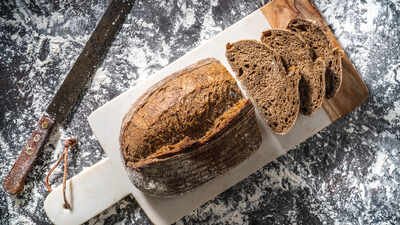
In a city where a bagel can be breakfast, lunch and a minor cultural institution, one new bakery is asking New Yorkers to rethink what bread can cost. In the heart of Soho, an Austrian family business has opened a shop devoted to just one loaf: a roughly 3.3-pound rye sourdough priced at $60, informs Euro News. But the question is what makes it so unique and pricey? As per the report, there are no shelves crowded with croissants, pastries or a dozen different breads. Instead, the bakery centers its operation around a single traditional rye loaf, made with organic rye flour, water and salt and fermented naturally. Scroll down to read the details.
A bakery built around one loaf
The new shop, called Rye, is located on Lafayette Street and brings the baking traditions of Graz to Manhattan. It is operated by the Auer family, which has built a bakery business with more than 40 locations in Austria, states the Euro News report. The flagship loaf weighs about 1.5 kilograms, or 3.3 pounds, and is made without commercial yeast. Its dough relies on natural sourdough fermentation, with the process taking up to 24 hours.If we go by the news report, the bread is baked in a two-tonne oven imported from Germany, adding another distinctly European element to the Soho operation. The report also states that customers who do not want to commit to an entire $60 loaf can buy smaller portions or slices topped with ingredients such as butter, chocolate spread or caviar.
A recipe with roots in Austria
According to the report, rye was chosen as the bakery’s sole bread partly because of its importance in Austrian baking. The grain has long played a central role in the country’s bread culture, and the Auer family’s recipe is said to have been passed down through generations. The method reportedly traces back to a farmer on an Alpine pasture who taught the technique to an older generation of the Auer family. It was later brought back to Graz and developed into the loaf now being sold in New York, states the online report.The bakery’s approach also puts fermentation at the center of the product. Unlike bread made with commercial yeast and designed for rapid production, sourdough requires significantly more time, space and labor. That lengthy process contributes to the loaf’s dense texture, pronounced flavor and extended freshness while also adding to its production costs.
The matter of $60
There is little mystery about why the price has attracted attention. At roughly $40 per kilogram, the Soho loaf sits far above ordinary bread prices in both New York and Europe. Traditional sourdough in New York can already command $10 to $20 per loaf, while specialty bakeries regularly charge more for labor-intensive products. Even so, $60 places Rye in an entirely different category, explains the news report. The price reflects more than ingredients. The bakery operates in one of Manhattan’s most expensive neighborhoods, while its production involves imported equipment, specialty ingredients and a slow fermentation process.
Luxury bread finds its audience
To date, critics have questioned whether bread should become a luxury product, particularly when the basic ingredients are so simple. Others see the loaf differently, pointing to the quality of the ingredients, the traditional recipe and the labor involved in producing a naturally fermented bread. In Soho, where premium food experiences are hardly unusual, Rye appears to be betting that there is an audience willing to pay for exactly that.Image Courtesy: istock