










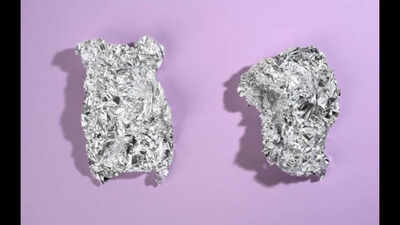
That roll of foil sitting in the kitchen drawer is doing a fraction of what it’s actually capable of. Beyond the usual job of wrapping leftovers or lining a baking tray, aluminium foil turns out to be a genuinely versatile household fix, quietly solving problems in rooms that have nothing to do with cooking at all. From candles that refuse to burn evenly to grimy pots that won’t come clean, a lot of these tricks work because of real, well-understood chemistry and physics rather than internet folklore. Here are six worth actually trying.
Preventing candle tunneling
Anyone who burns candles regularly knows the frustration of tunneling, when a candle burns straight down the middle and leaves a thick, untouched wall of wax around the edges. Wrapping a strip of foil around the outside rim of the candle jar, letting it extend just above the wax line while leaving the centre open for the flame, helps fix this. The foil reflects and retains heat around the entire circumference rather than just the middle, encouraging the wax to melt evenly all the way to the edges instead of just straight down. It’s a genuinely simple fix for a problem that otherwise wastes a surprising amount of candle.
Cleaning and deburring dull scissors
This is one of the most widely repeated foil tricks, and it’s worth understanding what it’s actually doing before trying it. Folding a piece of foil into several layers and cutting through it repeatedly, around six to eight passes, does make scissors feel noticeably sharper afterwards, but it’s not technically re-honing the blade’s edge the way a proper sharpening stone would. What it’s really doing is cleaning off built-up residue and gently smoothing out tiny burrs along the blade, which produces a similar practical result without actually being sharpening in the strictest sense.
Polishing tarnished silver
This one comes down to genuine, well-documented electrochemistry. Line a container with foil, shiny side up, add hot water along with a spoonful each of baking soda and salt, and submerge tarnished silverware so it makes direct contact with the foil. Silver tarnish is actually silver sulfide, and since aluminium is more chemically reactive than silver, it draws the sulfur away from the silverware and onto itself through an electrochemical exchange, effectively transferring the tarnish rather than scrubbing it off. Within a few minutes, the silver comes out noticeably brighter, with the dulling now sitting on the foil instead.
Reducing static cling in the laundry
Crumpling a ball of foil and tossing it into the dryer alongside a load of laundry works as a genuine substitute for dryer sheets, cutting down on the static cling that builds up between synthetic fabrics as they tumble. It works on largely the same principle as commercial anti-static products, helping dissipate the electrical charge that causes clothes to cling together and crackle when you pull them out. For a bit of extra fragrance, a light spritz of your favourite scented oil onto the foil before balling it up adds a pleasant smell without needing an actual dryer sheet at all.
Scrubbing grimy pots and pans
For genuinely stuck-on grease and food residue, a crumpled ball of foil used with a bit of dish soap and water works as an effective scrubber on stainless steel, aluminium, cast iron, and glass cookware. Its slightly rough, textured surface provides enough abrasive power to tackle stubborn grime without needing a separate scouring pad. One important caution, though: avoid using it on non-stick or copper cookware specifically, since the same abrasive quality that cuts through grease elsewhere can scratch and damage these more delicate surfaces.
Keeping craft punches and small blades clean
For anyone who does regular paper crafting, running a sheet of foil through decorative hole punches every so often helps keep the blades inside clean and functioning smoothly. In much the same way it cleans and deburrs a pair of scissors, passing foil through a punch’s mechanism clears away built-up paper dust and residue that can otherwise dull the cutting action over repeated use, extending the life of a tool that would otherwise start jamming or leaving ragged, uneven cuts.
One roll, a lot more than cooking
None of these six tricks need anything beyond a roll of foil you probably already have on hand, and together they cover everything from candle care to jewellery-adjacent polishing to basic laundry maintenance. It’s a reminder that some of the most useful household fixes were never about buying something new, just looking at what’s already sitting in a kitchen drawer a little differently.
Disclaimer:
This article is intended for general informational purposes only. Avoid using foil scrubbers on non-stick or copper cookware, as it may scratch or damage the surface. Always supervise candles while burning and never leave them unattended.