









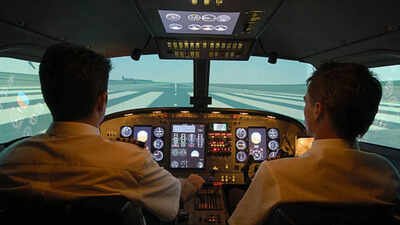
Unlike most colleagues who prepare lunches to share with each other and often enjoy a big group lunch, airline pilots have more of a lonely work life. They never eat the same meal and never at the same time. And the reason behind this is more unsettling than the simple reason of responsibility.Every commercial aircraft has two pilots up front and all for a reason. If something goes wrong with one, the other takes the helm and lands the plane. The aviation industry is extremely careful about its employees, work ethic, and timetables. Companies have to be extremely careful about anything that could take out both pilots at once, leaving the plane with flyers but not one who can fly. One of those things that airlines are extremely specific about is the meals on the tray in front of the pilots.
The flight from Anchorage
The morning of 3 February 1975, a Japan Air Lines Boeing 747 lifted off from Anchorage International Airport bound for Copenhagen. It had originally departed Tokyo, was headed onward to Paris, and was carrying 344 passengers and 20 crew. Most of the passengers were Japanese sales representatives from Coca-Cola, on a company-paid trip to Europe. Anchorage was the second stopover on a long-haul route. The passengers had breakfast about an hour before the aircraft approached Copenhagen.The passengers had a meal of ham and omlette that had been prepared the previous day at International Inflight Catering, a Japan Air Lines subsidiary in Anchorage. About an hour after breakfast, roughly 143 of the passengers began vomiting. According to the encyclopaedic record of the incident maintained on Wikipedia, drawing on contemporaneous New York Times reporting and the subsequent Lancet investigation, one of the three cooks who had prepared those omelettes at International Inflight Catering had infected lesions on the index and middle fingers of his right hand. He had bandaged them and gone to work. He had not told his manager. The lesions were carrying Staphylococcus aureus, and the specific ham he had handled with those hands was, as it sat at room temperature for the better part of a day, developing enough staphylococcal toxin to make several hundred people extremely ill.The pilots of the flight had come off a very long shift and their biological clocks were still on Alaska time, not European time. So they opted for steaks instead of ham omelettes. That was the only reason why they were still functional when the sickness swept through the cabin. The investigation into the incident was led by Dr Mickey Eisenberg, a US Public Health Service officer with the Alaska State Health Department. The full findings were published in the medical journal The Lancet on September 27, 1975 in a paper titled “Staphylococcal Food Poisoning Aboard a Commercial Aircraft.” The paper’s abstract reads: “To ensure against a common foodborne illness incapacitating the entire flight crew, cockpit crew members should eat different meals prepared by different cooks.”
A rule followed for years
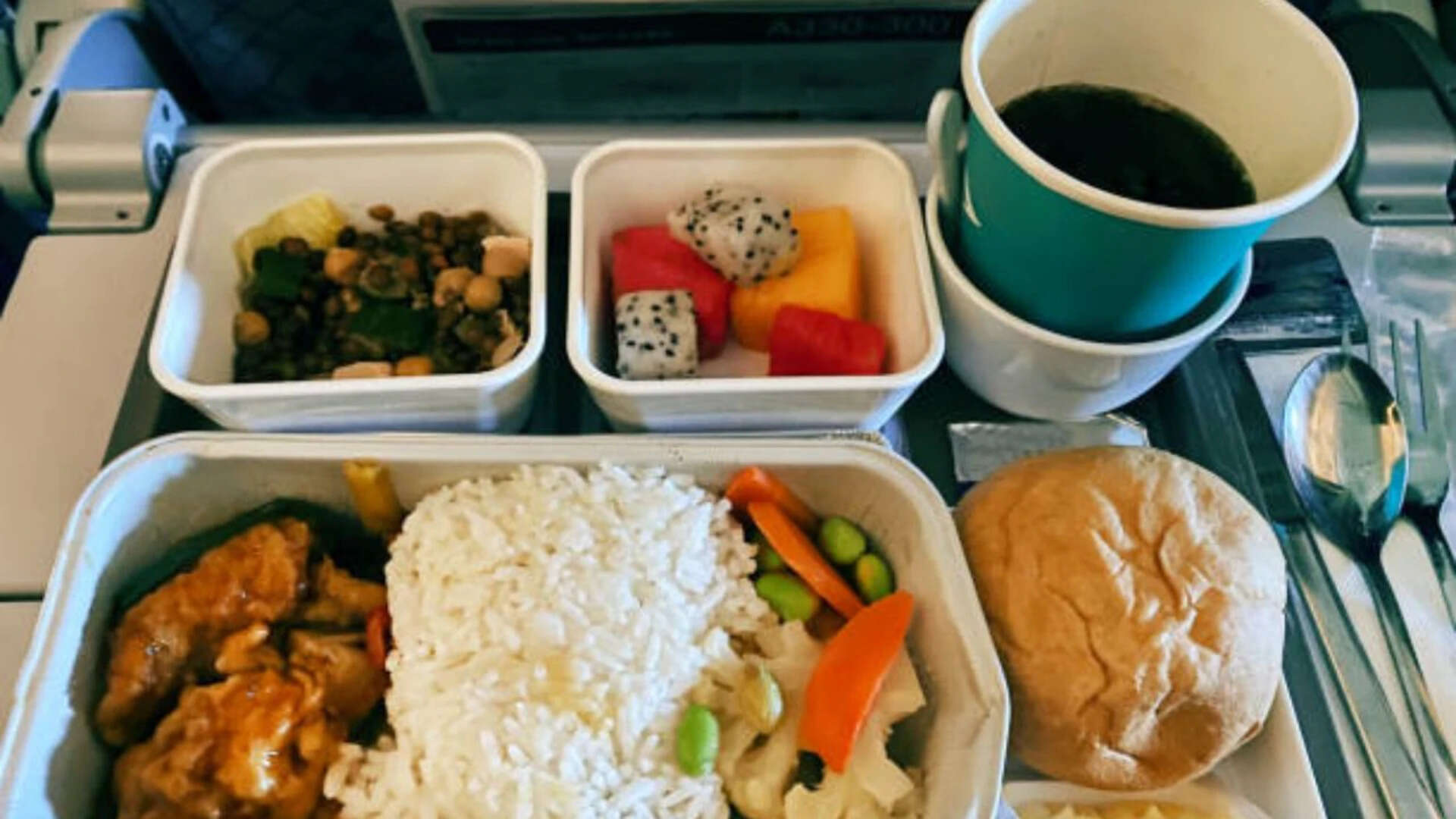
It is the principle that no single failure, of any kind, should be able to bring down an aircraft.
The rule has been followed today and has never been a formal regulation from the Federal Aviation Administration. According to an aviation safety management industry analysis published in March 2026 by SafeJets, a firm that specialises in Safety Management System frameworks for commercial and business aviation, the specific rule is codified inside each individual airline’s Operations Manual, or within the Air Operator Certificate safety documentation, or as a Standard Operating Procedure within the Safety Management System that ICAO and national regulators require every commercial operator to maintain.According to a report by Science Blog, what happens is that the catering supplier prepares the captain’s meal and the first officer’s meal in separate batches, sealed and labelled, and often sourced from different ingredient suppliers. Before pushback, the two pilots confirm to each other in the cockpit that they have not chosen the same meal. If they have, one of them changes. During the flight, they eat at different times, so that if either meal is going to produce symptoms, they will show up in one pilot before the other, giving the aircraft enough time to divert.Some airlines allow the captain to eat from the first-class galley while the first officer eats from the business-class galley, which by definition means the meals were prepared and stored separately. Some go further and require crew meals to be prepared in an entirely different kitchen from passenger meals, then delivered to the aircraft in sealed containers that only the crew opens. Some allow pilots to bring their own food from home, which many pilots quietly prefer.And when something does go wrong, the Standard Operating Procedure defines what happens next. If both pilots have inadvertently consumed the same meal, and either one begins showing symptoms, the flight is diverted. Not paused, not monitored, not maybe, just diverted.The specific philosophy this works on is redundancy. It is the principle that no single failure, of any kind, should be able to bring down an aircraft. Every critical system on a modern airliner has a backup. Two engines. Two hydraulic systems. Two electrical buses. Two pilots. Two of almost everything, so that if any one of them fails, the other one carries the aircraft to a safe landing.