









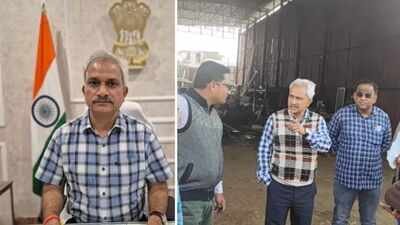
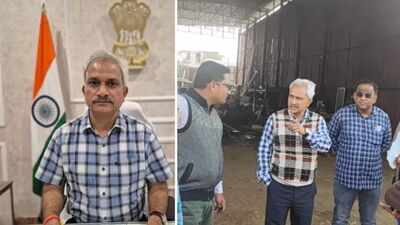
For years, residents of Nakatuwa in Madhya Pradesh’s Narsinghpur district had little reason to visit the Singri River. Once a place where families bathed, washed clothes and collected water, it had gradually turned into a polluted channel carrying sewage and household waste. Its foul smell kept people away, and its banks had become vulnerable to encroachment.Today, the same stretch is drawing families back. A 600-metre riverfront, complete with a community hall, cafeteria and open-air theatre, has given residents a reason to gather beside the water again. The change has been driven by a Rs 4.8 crore restoration effort led by Gajendra Singh Nagesh, CEO of the Narsinghpur Zilla Panchayat, with 26 projects implemented through local panchayats. The transformation was visible during a Deepdan celebration in Nakatuwa. Around 1,000 to 1,500 people gathered along the river to watch lamps float on the water. For Kamlesh Malaiya, the village sarpanch, the sight brought back memories of a time when the Singri was part of everyday life.
A river that slowly disappeared from people’s lives
The Singri runs for 39.6 kilometres before joining the Narmada near Narsinghpur town. It originates in Bachai village and passes through several rural and urban local bodies. Like many smaller streams in the district, it plays a role in feeding the Narmada. But years of sewage discharge, garbage dumping and construction close to the banks had taken a toll. Residents recall that after 2000, drainage and sewage lines began connecting to the river. Its water became increasingly polluted, while its flow weakened during summer and rose dangerously during the monsoon.When Nagesh inspected the stream in January 2026, he found a channel that had lost much of its natural character. In some places, its bed looked more like an open field than a river. Houses, warehouses and vehicle workshops had come close to the banks, while waste was being thrown into the water. This was not the first time Nagesh had worked on river restoration. During his earlier posting in Singrauli, he was involved in efforts to revive the Kanchan River and other local waterways through water-conservation structures. Reports on that work describe his preference for practical, community-supported methods rather than relying only on large construction projects.
The plan began with people, not machines
The first challenge in Narsinghpur was clearing the riverbanks. The administration spoke to people occupying the land and worked with the revenue department to remove encroachments from an initial stretch of around 900 metres. There was another problem: the project had no dedicated budget at the beginning. Nagesh approached other departments for machinery and support. Tractors, JCBs and Poclain machines were made available for about 800 hours, with the project paying for diesel.The administration also chose to divide the work into smaller projects and route them through gram panchayats. In total, 26 projects worth around Rs 10 lakh to Rs 25 lakh each were sanctioned, taking the overall amount to Rs 4.8 crore. Rausara, Magardha and Nakatuwa were among the main panchayats involved. Narsinghpur Collector Rajani Singh helped facilitate administrative clearances and funding support, Nagesh says.For village representatives, the scale of the work was initially daunting. Rahul Pandey, secretary of Rausara Gram Panchayat, recalls that residents were unsure whether they could take on such a large restoration project. Concerns also arose when surveys identified gardens and private structures along the riverfront. The revenue department measured the land, and the administration proceeded with clearing the encroachments.Residents were brought into the effort through shramdaan, or voluntary community work. Cleanliness drives, door-to-door awareness campaigns and workshops encouraged people to stop dumping waste and understand why the river needed protection. Sarpanches from neighbouring villages also shared resources and helped one another meet the tight deadlines before the monsoon.
Stone banks, natural filters and a return of fish
Instead of building concrete retaining walls, the team chose stone pitching to strengthen the banks while allowing the river and surrounding soil to interact. The riverbed was raised by around two to four metres, and gently sloping benches, three to five metres wide, were created. Stone was laid along approximately 2,000 running metres of the banks. Craftsmen from Chhindwara, Amravati and Damoh were brought in because skilled local stone workers were not available. The work was carried out during Madhya Pradesh’s Jal Ganga Samvardhan Abhiyan, a 100-day water-conservation campaign that ran from March 19 to June 30, 2026.Restoring the banks alone, however, could not solve the problem. Sewage and household waste would continue entering the river unless they were treated at the source. The administration therefore began installing small filtration units at points where village drains meet the Singri. The planned system uses screens to catch plastic and larger waste, followed by settling chambers and layers of gravel and sand to trap suspended particles. Plants such as canna indica, lemongrass and cyperus are also part of the treatment process. The units work through gravity and do not require electricity. Panchayats will be responsible for periodically cleaning the screens and removing collected waste.The filtration work is still underway. Nagesh has said the water has not yet reached permissible quality limits and that more filters are needed. The administration plans to extend the effort to all 14 gram panchayats along the river. Meanwhile, residents and officials have begun spotting fish and other freshwater life in stretches where aquatic life had reportedly disappeared.The villages are also working to reduce the waste entering the stream. Households have been encouraged to separate wet and dry waste, while self-help groups have started utensil banks to reduce the use of disposable plates and glasses at community functions. A plastic-processing unit costing around Rs 1 crore is planned at Nakatuwa to serve approximately 35 gram panchayats.
A riverfront that needs its people
The new riverfront is already changing how residents use the space. Women and senior citizens visit the banks, families gather in the evenings, and people who once avoided the area now help keep it clean. Around 100 acres along the river and adjoining land have also been planted with local species. For Kamlesh, the Deepdan gathering was more than a celebration. It was a reminder of what the river once meant to his community and what it could mean again. He remembers drinking from the Singri as a child, then watching it become too polluted to approach.Nagesh hopes to bring all 14 panchayats along the river into the restoration effort before his next posting. His approach is based on dividing a large task into manageable projects and involving the communities that depend on the resource. The Singri is not fully restored yet. Sewage connections remain, water quality needs further improvement and more filtration units are planned. But the return of people to its banks, along with the first signs of aquatic life, suggests that the river is no longer being treated as a drain alone. Its future will depend on whether the villages can protect what has been rebuilt.