








For 50 years, West Coyote Hills in Fullerton, California, has faced the threat of development. The 510-acre open space is a former oil field owned by Chevron-Pacific Coast Homes and surrounded by parts three cities- La Mirada, Buena Park and La Habra.Now, after 25 years of community efforts to preserve the land, the campaign to protect the remaining portion has entered its final stage. Friends of Coyote Hills says more than 75% of the funding needed to buy the property has been secured, but $20 million is still required to complete the $95 million purchase.The conservation group is seeking the remaining funding to permanently protect the west side of Coyote Hills as parkland and a nature preserve. If the purchase is completed, the total protected area will reach 582 acres, including the Robert E Ward Nature Preserve.The effort began in 2001, when a small group of local residents came together to protect one of the last large natural open spaces in the North Orange County–South Los Angeles region. Over the next 25 years, their campaign has led to the protection of more than 200 acres on the eastern side of the site.
A long fight
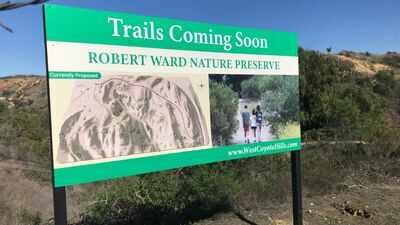
The first major breakthrough came in 2014, when advocacy efforts resulted in a density shift that protected about 121 acres.In December 2021, the City of Fullerton acquired about 24 acres next to what later became the Robert E Ward Nature Preserve. The purchase, supported by significant funding from the State of California and private funders, expanded the preserve to about 72 acres.The community was then able to experience part of the protected land directly. In 2023, more than two miles of recreational trails opened at the Robert E Ward Nature Preserve. According to Friends of Coyote Hills, this allowed the public to experience the natural area for the first time in nearly 50 years.The next major step came in April 2026 when the State of California approved the Purchase and Sale Agreement, authorising the Watershed Conservation Authority to buy the remaining site from Chevron-Pacific Coast Homes for $95 million.Of that amount, $75 million has already been committed. The remaining $20 million is the final funding gap before the acquisition can be completed.
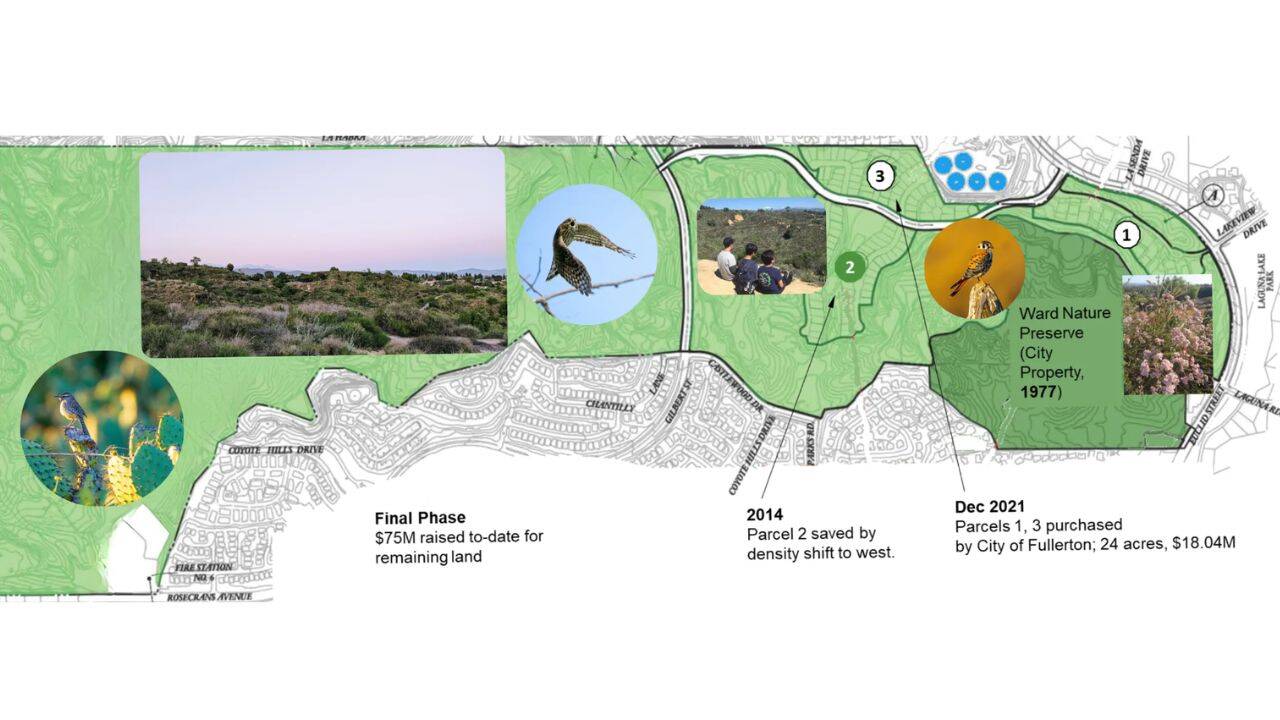
Land parcels of West Coyote Hills in Fullerton
Habitat for threatened species
West Coyote Hills contains coastal sage scrub habitat and supports a range of wildlife and plant species.Friends of Coyote Hills says the property supports 56 pairs of threatened California gnatcatchers, described by the group as the largest population in Southern California. It also supports 69 pairs of coastal cactus wrens, which are listed as a California State Species of Special Concern.The Fullerton Observer reported that West Coyote Hills supports 368 additional species. These include the endangered least Bell’s vireo, tricoloured blackbird, white-tailed kite, intermediate mariposa lily and coastal cactus wren.The conservation group describes the site as part of a biodiversity hotspot and says the area is home to 15 rare, endangered and sensitive species.Protecting the remaining land would also preserve one of the largest unpaved portions of the Lower San Gabriel River Watershed. It could also help downstream coastal and marine resources by avoiding water quality impacts linked to increased urban stormwater runoff.
Push for $20 million gap
The planned Phase 2 acquisition is expected to close between 2026 and 2027, according to the organisation. Completing it would permanently protect the remaining habitat and bring the total protected acreage to 582 acres.Friends of Coyote Hills says the campaign has been working towards this goal for 25 years. The group says its mission is to save all 510 acres of West Coyote Hills as a park and nature preserve for present and future generations.More than one million people live within a seven-mile radius of West Coyote Hills, while the wider area served by the site includes more than two million residents in park-poor communities across Orange and Los Angeles counties.The property has several potential public uses, including habitat protection, restoration, trails, bikeways, scenic access and education. West Coyote Hills is an outdoor educational resource because of its ecology and archaeological history.