









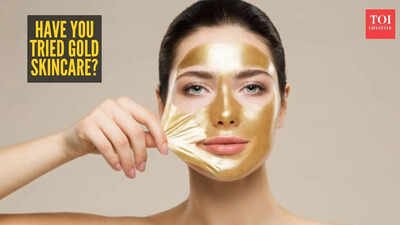
Gold in skincare has a certain allure- there’s no denying that. The moment you hear “gold facial” or see flecks of gold in a serum, it instantly feels luxurious, almost indulgent. It’s the kind of treatment people gravitate towards before a big event, expecting that lit-from-within glow. But how much of that is real, and how much is just clever positioning?According to Dr. Rupika Singh, Founder & Chief Dermatologist at Akiya Aesthetics, the hype doesn’t quite match the science.“Gold facials sound premium, and that’s a big part of the appeal,” she says. “But clinically, gold isn’t doing anything dramatic for the skin long-term. It’s more of an add-on than a hero ingredient.”

That said, it’s not entirely without benefits. Gold does have mild anti-inflammatory properties, which can help calm the skin, something that becomes especially noticeable when your skin is irritated or stressed.“When the skin is less inflamed, it naturally looks more even and rested,” she explains. “That’s usually what people are seeing when they talk about that post-facial glow.”Dr. Anika Goel, MD Dermatologist and Founder of Soul Derma Clinic, agrees, adding that gold’s role today is more subtle than people expect.“In modern skincare, we’re not using raw gold in the way people imagine,” she says. “It’s processed into very fine particles that sit comfortably on the skin and can slightly improve circulation.”That boost in circulation is often why skin looks brighter immediately after a treatment – but it’s temporary.“It’s not correcting anything at a deeper level,” she points out. “It just gives you that fresh, just-done look for a short while.”There’s also the antioxidant angle, which often gets highlighted in marketing. While gold does offer some support against environmental stress, it’s not in the same league as ingredients that are specifically designed to repair and protect the skin.“Calling it anti-ageing is where things get misleading,” says Dr. Singh. “It’s not going to build collagen or smooth out deeper wrinkles in any meaningful way.”If real, visible results are the goal, both experts say the focus should stay on proven actives.“Retinol, vitamin C, peptides, hyaluronic acid—these are the ingredients that actually change how your skin behaves over time,” says Dr. Goel.In most cases, gold is present in very small amounts anyway. Its role is less about performance and more about the overall experience—the texture, the finish, the feeling of doing something indulgent for your skin.So where does that leave gold skincare?“I look at it as something you do when you want to feel pampered,” says Dr. Singh. “It’s great before an event, when you want your skin to look fresh and well-rested.”Dr. Goel puts it simply: “There’s nothing wrong with enjoying it but it shouldn’t replace a routine that’s actually working for your skin.”At the end of the day, gold skincare sits somewhere between self-care and surface-level results. It can make your skin look good for a moment but long-term skin health still comes down to consistency, sun protection, and ingredients that are backed by real research.