









Headlines

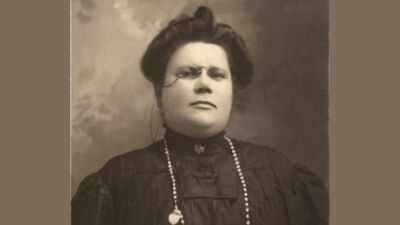
At 20, Finnish immigrant Maggie Walz arrived in Michigan with just $7; in 1903 she claimed 160 acres on a Lake Huron island and the colony she founded grew to five settlements with around 1,000 people

Maggie Walz Photo credit: National Park Service Born Margareeta Johanna Konttra Niiranen in Tornio, Finland, in 1861, Maggie Walz came to the United States at the age of 20 with almost nothing, just $7 in her pocket and a determination to build a new life. According to the National Park Service (NPS), Walz arrived in…

Read More

In 1958, Mahala Ashley Dickerson visited Alaska on vacation and decided to move there; after claiming 160 acres, she became the territory’s first Black homesteader and months later its first Black lawyer

Dickerson had built a career that included several notable firsts. (Anchorage museum photo) American lawyer and civil rights advocate Mahala Ashley Dickerson’s life took her from Montgomery, Alabama, to Alaska, where she broke barriers in both the legal profession and homesteading. Her journey has been featured by the National Park Service among important figures in…

Read More

In 1940, the Walker sisters sold their 122-acre Tennessee homestead for $4,750; a lifetime lease let them keep living there inside Great Smoky Mountains National Park

Deep in the heart of Great Smoky Mountains National Park, where mist clings to the ridges and the forest hums with life, stands a quiet log cabin. It is the home of the Walker sisters, six unmarried women who refused to leave their mountain home, even as the world changed around them. Their story is…

Read More

In 1898, 17 years after surviving the O.K. Corral gunfight, Virgil Earp claimed 160 acres in Arizona; two years later, he earned title to the land

Representative Image (AI-generated) Seventeen years after surviving the famous O.K. Corral gunfight, former Tombstone lawman Virgil Earp embarked on a very different chapter of his life. In 1898, Earp claimed 160 acres of land near Prescott, Arizona, under the federal homesteading system. Because of his previous service in the Union Army during the Civil War,…

Read More

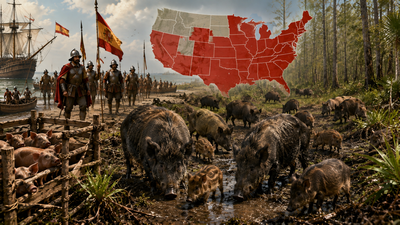
Spanish explorers brought pigs to America for food in the 1500s; today, millions of feral swine roam at least 35 US states

When Spanish explorers brought pigs to what is now the southeastern United States in the 1500s, the animals were intended as a practical source of food rather than a threat to native ecosystems. Centuries of escapes, free-ranging livestock and later introductions of Eurasian wild boar changed that. According to the US Department of Agriculture’s Animal…

Read More

A small Texas reactor reached criticality in under a year, aiming to produce medical isotopes that US hospitals now import

Representative Image of a modern Texas nuclear reactor supporting advanced isotope production for healthcare (AI-generated image) Every day, more than 40,000 Americans undergo a diagnostic scan that depends on technetium-99m, a radioactive isotope used to image the heart, spot cancer and check kidney function. Every milligram of the molybdenum-99 that produces it currently arrives in…

Read More