







Headlines

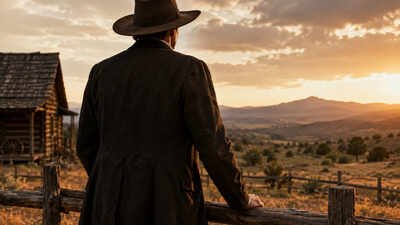
In 1898, 17 years after surviving the O.K. Corral gunfight, Virgil Earp claimed 160 acres in Arizona; two years later, he earned title to the land

Representative Image (AI-generated) Seventeen years after surviving the famous O.K. Corral gunfight, former Tombstone lawman Virgil Earp embarked on a very different chapter of his life. In 1898, Earp claimed 160 acres of land near Prescott, Arizona, under the federal homesteading system. Because of his previous service in the Union Army during the Civil War,…
Read More

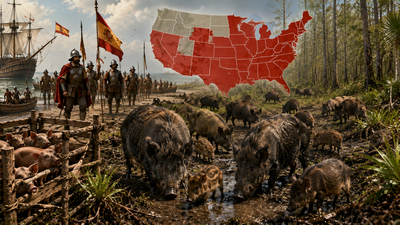
Spanish explorers brought pigs to America for food in the 1500s; today, millions of feral swine roam at least 35 US states

When Spanish explorers brought pigs to what is now the southeastern United States in the 1500s, the animals were intended as a practical source of food rather than a threat to native ecosystems. Centuries of escapes, free-ranging livestock and later introductions of Eurasian wild boar changed that. According to the US Department of Agriculture’s Animal…

Read More

A small Texas reactor reached criticality in under a year, aiming to produce medical isotopes that US hospitals now import

Representative Image of a modern Texas nuclear reactor supporting advanced isotope production for healthcare (AI-generated image) Every day, more than 40,000 Americans undergo a diagnostic scan that depends on technetium-99m, a radioactive isotope used to image the heart, spot cancer and check kidney function. Every milligram of the molybdenum-99 that produces it currently arrives in…

Read More

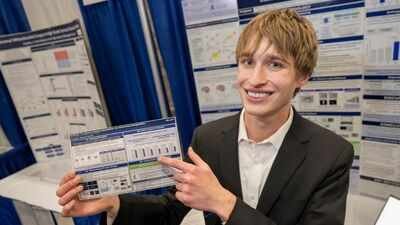
Minnesota teen Evan Morris built a low-cost system that detected seizure-like activity in worms and triggered ultrasound; recurrence fell 70.1% in his model

Evan Morris (Image Credit: Society For Science) Eighteen-year-old Evan Morris of Saint Paul, Minnesota, has developed a low-cost experimental system that could offer researchers a faster way to study how brain stimulation might control seizures. His project, called SILENCE: On-demand seizure suppression via closed-loop sonogenetics, uses genetically modified worms, a computer-controlled detection system and ultrasound…

Read More

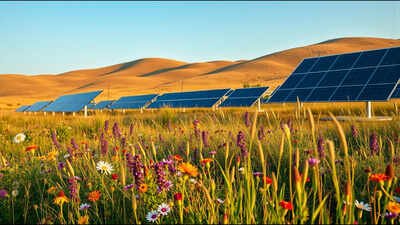
A Connecticut cemetery leased unused land for 7,000 solar panels, but the ground beneath them could become habitat for bees and pollinators

Representative Image of a cemetery with solar panels surrounded by wildflowers and native grasses (AI-generated image) At the back of a Catholic cemetery in Torrington, Connecticut, a wide field once sat empty for years, too far from the graves to ever be needed. Then came rows of dark solar panels, built on land owned by…

Read More

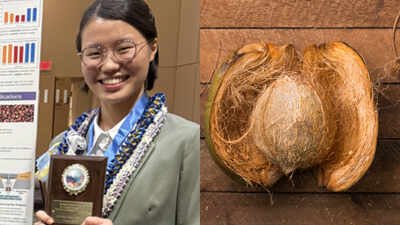
Meet Vera Wang, the Hawaii high school senior who built a coconut-based ocean filter as a sophomore; two years later, she found fungi in coconut husks that can biodegrade plastic and sunscreen

Wang’s work, done in the lab of Anthony Amend at the University of Hawaiʻi at Mānoa, was recognized at the 2026 Hawaiʻi State Science & Engineering Fair What started as a high school project to clean polluted ocean water has turned into a promising scientific discovery. Hawaii’s Kaiser High School senior Vera Wang was the…

Read More

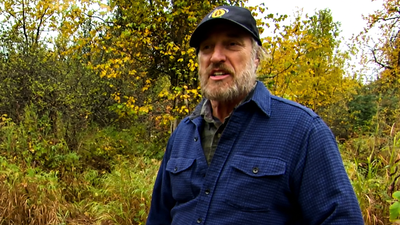
In 1974, Vietnam veteran Kenneth Deardorff moved to Alaska looking for work; 14 years later, he became the last person in US history to receive a homestead title

Vietnam veteran Kenneth Deardorff arrived in Alaska in 1974 with a geography degree and plans to find work with the US Geological Survey or another employer. Instead, the California native became fascinated by the idea of building a life in the state’s remote wilderness. He travelled to the Bureau of Land Management office in Anchorage,…

Read More