









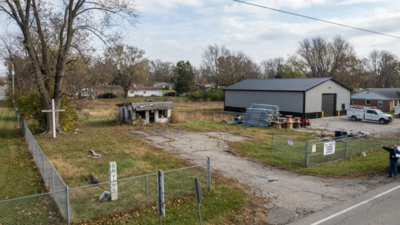
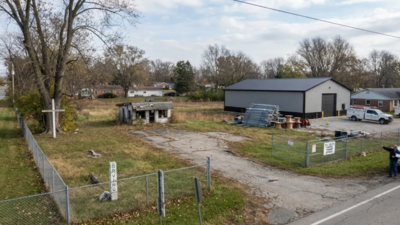
An Ohio electrical contractor that paid $270,000 for a nine-acre property once used as a golf driving range, pizza shop and church has been given another chance to challenge county rules preventing it from running its business there. An appeals court has restored two of the company’s legal claims after finding that the lower court was wrong to dismiss them.The Ohio Court of Appeals for the Twelfth District issued its ruling on 16 November 2026 in a dispute between Jackson & Jackson, LLC, and Butler County officials. The company bought the property in November 2021, intending to use its existing buildings and parking area for its electrical services business. County officials later told the company that commercial activities were not allowed under the property’s residential zoning rules. In its decision, the appeals court overturned part of an earlier ruling by the Butler County Court of Common Pleas. It allowed Jackson & Jackson to continue with two of its claims, including its argument that the zoning restrictions amounted to an unconstitutional taking of private property without compensation. However, a third claim challenging the restrictions remains dismissed.The judges sent the case back to the lower court for further proceedings. They did not decide whether the county had actually violated the company’s constitutional rights. Instead, they ruled that the two claims should not have been dismissed at such an early stage. According to the court decision published by Justia, the case is recorded as Dickard v. Jackson & Jackson, L.L.C., case number CA2025-07-072, and citation 2026-Ohio-4530. Judge Mary Donovan wrote the opinion, with Presiding Judge Robin N. Piper and Judge Mike Powell agreeing.
A nine-acre property with several previous businesses
The disputed property covers around nine acres at 5670 West Alexandria Road in Madison Township, Butler County, Ohio. According to the Twelfth District Court of Appeals, the site has a long history of commercial and community use, even though it is located in an R-1 Suburban Residence District. A golf driving range opened on the property in 2003. A pizza business began operating alongside it in 2009, and a church started using the site in 2018. The appeals court pointed out that although commercial activities were not permitted under the zoning rules, the Butler County Auditor had listed the property’s use as “Commercial”.On 22 November 2021, Jackson & Jackson bought the nine-acre property from its previous owner for $270,000 through a general warranty deed. The company provides commercial electrical and emergency response services. Its work includes helping state and local governments restore power lines after storms and other emergencies. Jackson & Jackson knew about the property’s earlier commercial uses before completing the purchase. It planned to use the land for part of its existing business. After buying it, the company began parking its trucks and equipment in the property’s parking area. It also started using the existing office space inside one of the buildings for business activities.
County challenges the company’s commercial operations
The dispute began in May 2023, when the Butler County Zoning Inspector’s office sent Jackson & Jackson a notice saying it had violated zoning rules. Around 9 May 2023, Zoning Inspector Dennis Dickard told the company to stop operating its business from the property. County officials argued that commercial activities, including electrical contracting work, were not allowed under the R-1 residential zoning rules. Jackson & Jackson responded by applying for a use variance. It wanted permission to park its company vehicles on the property and use the existing building as an administrative office.On 17 August 2023, the Butler County Board of Zoning Appeals rejected the application. The company did not challenge that decision through an administrative appeal at the Butler County Court of Common Pleas. It continued operating its business from the property. Later in 2023, Dickard filed a lawsuit against Jackson & Jackson. He asked the court to issue an injunction ordering the company to stop breaking the county’s zoning rules. The company filed a response and a counterclaim against the county. In December 2024, it submitted an amended counterclaim naming Dickard and the Butler County Board of Commissioners as defendants. Jackson & Jackson argued that the county’s restrictions were unconstitutional when applied to its property. It described the rules as unfair and unreasonable, especially considering the property’s long history of commercial use and the existing buildings designed for business activities.
Company argues zoning rules amount to an illegal taking
Jackson & Jackson’s amended counterclaim included three separate claims. The first asked the court to declare that the zoning rules were unconstitutional when applied to its property. The company based this argument on the Fifth and Fourteenth Amendments to the US Constitution, as well as the Ohio Constitution. The company argued that preventing commercial activities ignored the property’s previous uses and stopped it from earning income from the land. The second claim focused on what is known as a regulatory taking. Jackson & Jackson argued that the county had interfered with its reasonable expectations when it bought the property for business purposes. It also claimed that the restrictions had taken away the land’s economic value without providing compensation.The third claim sought financial compensation under Section 1983 of federal law. The company argued that the county’s actions had harmed its business and that it was entitled to payment for the alleged taking of its property. Butler County asked the trial court to dismiss all three claims. County officials argued that the federal claim had been filed too late because it was subject to a two-year deadline. They also said the company first needed to file a writ of mandamus, a legal action asking the government to carry out its duties, to begin formal property acquisition proceedings. The county further argued that Jackson & Jackson had failed to challenge the rejection of its use variance application through an administrative appeal in August 2023. The trial court agreed with the county and dismissed all three counterclaims. Jackson & Jackson then appealed the decision.
Appeals court finds two claims can proceed
After examining the three claims separately, the Twelfth District Court of Appeals found that the trial judge had made several legal mistakes. On the filing deadline, the appeals court ruled that Jackson & Jackson’s federal property-taking claim was covered by Ohio’s four-year time limit under Section 2305.09(E), rather than the two-year period used by the lower court. The company filed its original counterclaim on 22 May 2024. This was within the four-year period, whether the deadline began when it bought the property on 22 November 2021 or when the zoning board rejected its application on 17 August 2023. The appeals judges therefore found that the claim should not have been dismissed as too late. The judges also rejected the county’s argument that the company had to file a writ of mandamus before bringing its federal claim. Referring to the US Supreme Court’s 2019 decision in Knick v. Township of Scott, the appeals court explained that property owners do not have to complete state compensation procedures before filing a federal claim under Section 1983.The judges also confirmed that Ohio state courts have the authority to hear these federal claims. The appeals court then considered the company’s first claim, which challenged the constitutionality of the zoning rules. It ruled that Jackson & Jackson could ask for a court declaration on this issue without first filing an administrative appeal. The judges referred to earlier Ohio Supreme Court decisions in Driscoll v. Austintown Associates and Karches v. City of Cincinnati. These cases supported the company’s right to bring a constitutional challenge through a declaratory judgment action. The appeals court also found that the zoning board’s rejection of the company’s application in August 2023 was a final decision. This meant Jackson & Jackson could proceed with its challenge to the zoning restrictions.
One claim remains dismissed
Although the appeals court restored two of the company’s claims, it refused to bring back the second one. That claim asked the court to declare that the zoning restrictions amounted to an uncompensated taking of the property, but it did not separately request compensation through that claim. The judges found that simply making such a declaration would not settle the dispute. They also explained that a claim for compensation under Ohio state law for a property taking must be brought through mandamus proceedings.The appeals court therefore agreed with the lower court that this particular claim had been correctly dismissed. In its final decision, the Twelfth District Court of Appeals upheld part of the trial court’s ruling, overturned another part and sent the case back to the Butler County Court of Common Pleas. Jackson & Jackson can now continue with its constitutional challenge to the zoning rules and its federal compensation claim under Section 1983. The appeals court also divided the legal costs of the appeal, ordering the company to pay 35 per cent and Butler County to pay the remaining 65 per cent.