







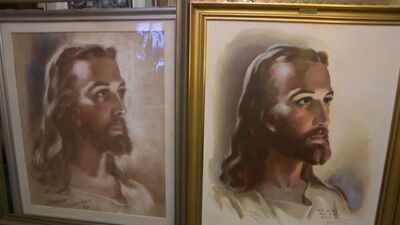
In 2016, Chicago photographer Paul Beaty walked into a Salvation Army thrift store with $300 in his pocket and left with two artworks priced at $125 each. After negotiating the price down, he paid $220 in total for what turned out to be rare original works by Warner Sallman, the Chicago artist behind the widely reproduced 1940 painting Head of Christ. Two years later, Beaty sold both pieces to Colorado author Jerry Jenkins for $135,000, according to WTTW Chicago.The story is a striking example of how ordinary places can hold extraordinary objects. Beaty was not an art dealer or a collector with a specialist’s eye, but a freelance photographer who enjoyed searching garage sales and flea markets for pieces of Americana. What he found that day would eventually reshape the market value of Sallman’s original work. Read more about this surprising incident, as per the report, here:
A familiar image from childhood
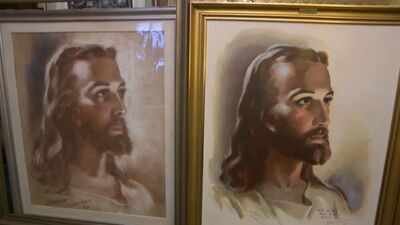
Sallman’s Head of Christ is one of the most recognisable religious images in the world. It has been reproduced more than a billion times on prayer cards, candles, stamps, and countless other items, shaping how generations of people have visualised Jesus Christ. Beaty remembered seeing a reproduction of the painting in a school classroom when he was a child. That memory helped him recognise the artworks immediately when he saw them inside the Salvation Army store in February 2016.“I walked in and couldn’t believe something like this would be in the Salvation Army,” Beaty told WTTW. He said he knew from across the room that the pieces were originals, though he did not yet understand how rare they were until he began researching them online.
Two works, one artist
The pieces were not identical. One was an oil painting, believed to be one of only five such works Sallman created. The other was a chalk drawing, a different medium but connected to the same artist and the same iconic image. Each work measured roughly three feet wide and four feet high. At the time Beaty found them, both were priced at $125, a figure that now seems almost impossible given what they would later sell for.Beaty negotiated the price down to $100 per piece. With tax, he paid $220 for both artworks, a purchase that would become one of the most remarkable thrift store finds in recent memory.
Experts confirmed the value
After finding the pieces, Beaty sought expert confirmation of what he had. Sallman expert Leroy Carlson appraised the oil painting at $100,000 and the chalk drawing at $35,000, bringing the combined value to $135,000.That appraisal was significant because no original Warner Sallman work had previously been sold, according to Beaty. Many people told him the pieces would be difficult to sell without an art broker or auction house, and some doubted whether they were worth the appraised amount.
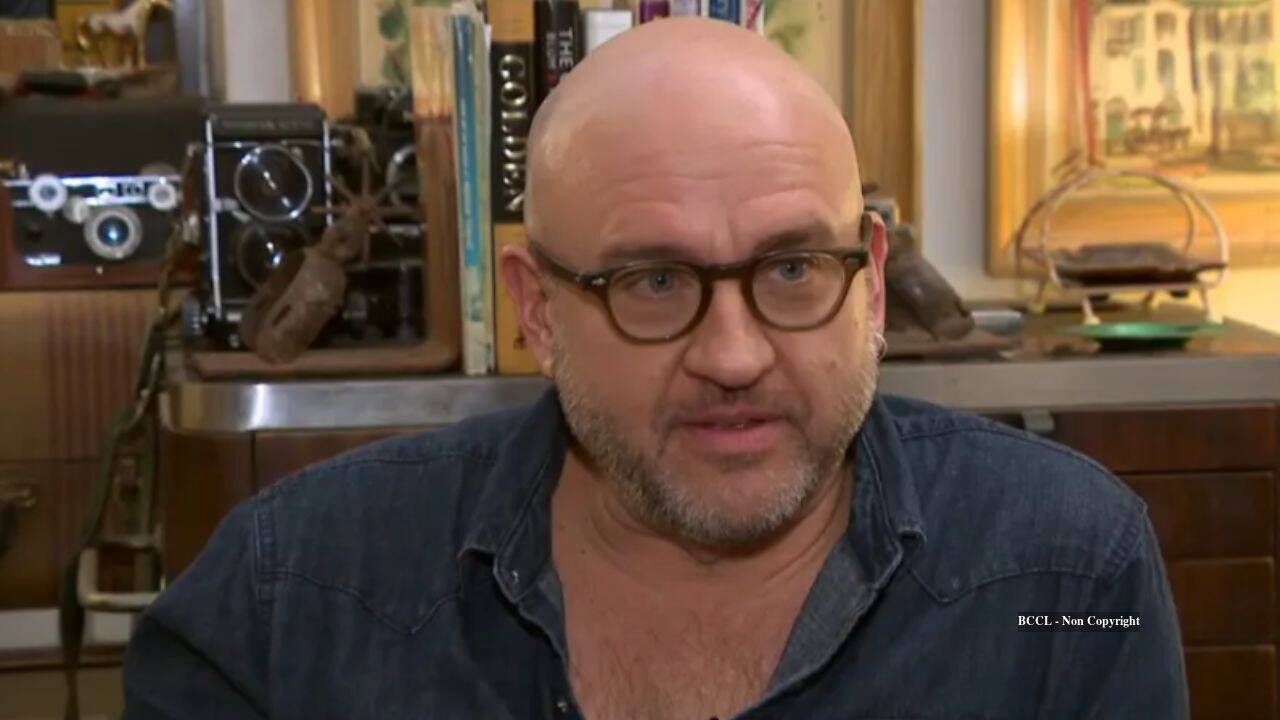
Chicago photographer Paul Beaty Photo credit: WTTW
Beaty spent the next two years trying to find a buyer. He contacted art brokers and museums, but nothing came together until a relative of Jerry Jenkins saw a Chicago Tonight segment about the discovery on Facebook and reached out.
A buyer with a personal connection
Jerry Jenkins, a Christian novelist and biographer best known for the Left Behind series, had a long-standing connection to Sallman’s work. He said he had felt drawn to the artist’s paintings since childhood, and later learned that his wife’s grandfather had known Sallman personally.That connection made the purchase feel personal rather than purely financial. Jenkins said it seemed like destiny that he and Beaty felt such a strong connection to the story and to the paintings.Jenkins has written more than 180 books, including profiles of Chicago Bears legends Walter Payton and Mike Singletary. He has also served on the board of the Chicago-based Moody Bible Institute for nearly two decades, giving him both the means and the context to appreciate the significance of the works.
The $135,000 deal
Jenkins purchased both pieces for exactly the appraised value, $100,000 for the oil painting and $35,000 for the chalk drawing. The deal was finalised in a contract signed inside Beaty’s Chicago home earlier in March 2018.For Beaty, the sale was more than a financial win. It validated the instinct that told him the artworks were special, even when others doubted their value. “This sets the value of what an original Warner Sallman is worth now,” he said.The oil painting was believed to have hung for years inside Salvation Army buildings in Minneapolis and Des Plaines before Beaty found it. Jenkins planned to display it in a building next to his home where he does his writing.
What happens to the chalk drawing
Jenkins said he was considering donating the chalk drawing in the future, either to a Christian institution or possibly back to the Salvation Army. That possibility adds another layer to the story, suggesting the artwork may eventually return to a public or religious setting.The oil painting, meanwhile, was set to travel to Colorado with Jenkins’ son the following week. Jenkins expressed excitement about having the works in his possession and gratitude that they had found a new home.The sale also highlights how art markets can be unpredictable. An object with no prior sales record can be difficult to price, but once a buyer with both interest and means steps forward, the market can establish a new benchmark almost overnight.
A lesson in paying attention
Beaty’s story is often told as a thrift store miracle, but it is also a lesson in curiosity and persistence. He noticed something unusual, trusted his instincts, researched what he had found, and spent two years finding the right buyer rather than accepting a low offer.Not every thrift store purchase will turn into a six-figure sale. But the case shows why it can be worth looking closely at old paintings, signed prints, vintage photographs, and other items that may seem ordinary at first glance.For Beaty, the $220 purchase became a life-changing discovery. For Jenkins, it was a chance to own a piece of religious and artistic history connected to his own family story. And for the wider art world, it set a new reference point for the value of an original Warner Sallman work.