







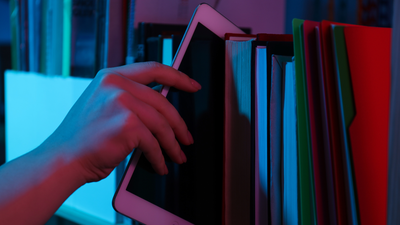
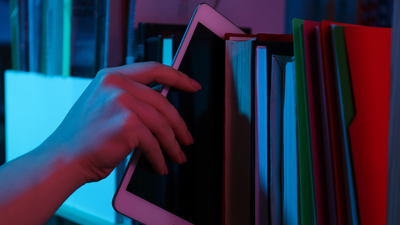
With the advancement in digitalisation, we often end up tending to our mobile phones and laptops and reading about things on these digital devices. But then there are bibliophiles who still launch into a bookstore wholeheartedly, waiting to add to their collection with a new addition.It’s all about holding that book in your hand and getting yourself drenched in that smell of new books and fresh pages.But between the feelings of turning the pages with your thumb and reading on a Kindle, psychology explains a lot.Let us find out what psychology has to say about your choices of reading vessels
Why some readers still choose printed pages, and what research says about them
According to a 2018 PLOS One survey of 10,293 university students, led by Diane Mizrachi, most students reported better focus and memory with print and preferred it for longer texts. The survey covered students in 21 countries. So, one of the major benefits of reading print is that it gives scope for better focus and can be a way of building a quiet boundary around attention.
They understand the storyline better and feel as part of the story
In a 2019 Frontiers in Psychology experiment, Anne Mangen and colleagues asked 50 participants to read a 28-page mystery story, about an hour of reading, on a Kindle or in a print pocket book. On most tests, the two groups did the same. But print readers did better on measures of chronology and timing. The authors suggest the feel of the pages gives readers extra clues about where events sit in the story. It was a small study of one story, so treat it as a clue, not proof.
Reading printed books gives a sense of feeling
Digital books are lighter, searchable, and kind to tired eyes. Yet a 2018 meta-analysis in Educational Research Review by Pablo Delgado and colleagues, covering 54 studies and about 171,000 participants, found a small advantage for paper.Mangen and her team found that paper’s advantage mostly showed up with informational texts, like textbooks and articles. When people read stories on their own. So if you love novels and still reach for a printed book, it may be less about understanding the story better and more about how reading on paper feels to you.
They see themselves as readers
A 2014 study by Åse Tveit and Anne Mangen of 143 tenth-graders found that most students preferred an e-reader overall, especially boys and reluctant readers, while avid readers preferred reading in print. So the format is a part of how someone sees themselves.It is all about emotional attachment and identityAccording to a study led by Sabrina Helm, participants felt more emotionally attached to physical books and used them to express identity, while limits on sharing, gifting, or selling made e-books feel less valuable. Many said an e-book felt more like renting than buying,