



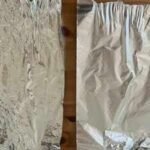





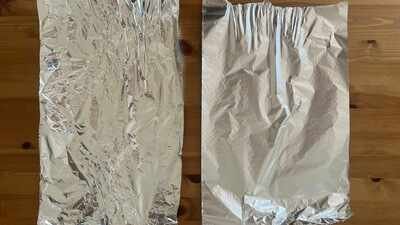
Open a roll of aluminium foil and you will see two different finishes: one side shiny, the other dull. Many people were taught that one side cooks better, reflects more heat or keeps food moister, and kitchens have argued about it for years. The truth is simpler. The difference has nothing to do with cooking. Here is why foil looks the way it does and the one case where it does matter.
Why foil has two different sides
The difference comes from the way foil is made. The manufacturing process rolls two sheets of foil at the same time, allowing them to be made thinner without ripping. The side against the polished steel rollers comes out shiny; the side against the other foil sheet comes out dull. In other words, the difference in appearance is simply a by-product of the manufacturing process.
Does it matter which side you use?
For regular foil, no. Foil makers say that both sides do the same job in cooking, freezing and storing food, and that it is perfectly fine to place your food on either side. The shiny side may look as if it would reflect more heat, but the difference is so slight that it makes no practical difference to cooking times. So whether you are wrapping a paratha, baking fish or covering a casserole, you can use whichever side you like.
The one exception: non-stick foil
There is one case where the side does matter. Non-stick foil has a coating on only one side, and that coating is on the dull side, so that is the side that should touch your food. The packaging is normally marked to help, and one manufacturer offers a simple memory aid for its non-stick foil: if you can read the writing on the foil, you have the right side up. If you are unsure, check the box, since brands can differ.
Practical tips for the kitchen
Use either side of regular foil, and do not worry if you wrapped a tiffin the “wrong” way. For non-stick foil, place food on the non-stick side, and look at the label if you are not sure. Foil that is torn or crinkled can leave gaps, so fold the edges firmly when wrapping food for baking or grilling. Let hot foil-wrapped food cool a little before opening it, since steam can burn.
Disclaimer:
This article is intended for general informational and household purposes only. Foil brands and products differ, so always follow the instructions printed on the pack. Handle hot foil and trays with care, and keep children away from ovens and open flames.