









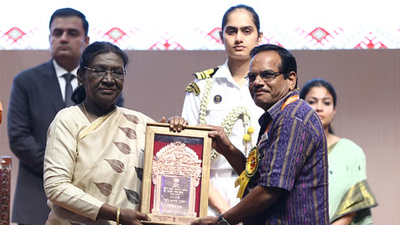
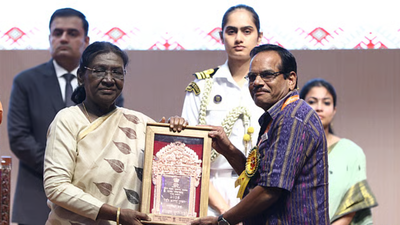
A saree woven by Prafulla Kumar Sahoo is not completed in a few days. The 59-year-old weaver from Dodunda Singipur village in Odisha’s Jagatsinghpur district spends around 30 days, including preparation, making one specially designed Patta saree. The work involves fine cotton yarn, carefully arranged threads and motifs created by hand, one section at a time.Sahoo has spent nearly 45 years practising this craft. But his work is not limited to keeping an old weaving technique alive. He has also trained more than 200 unemployed women and young people in basic weaving and jalla dobby techniques, helping some of them earn a monthly income of around Rs 10,000 to Rs 12,000.According to Odisha Bytes, his contribution to handloom weaving was recognised with the National Handloom Award 2025, which President Droupadi Murmu presented in August 2026. He had also received the Tantakruti Award from Odisha Chief Minister Mohan Charan Majhi in 2025..For Sahoo, preserving Jagatsinghpur’s distinctive single-count Patta design and making weaving a viable livelihood for others are closely connected.
A weaving technique that takes patience and precision
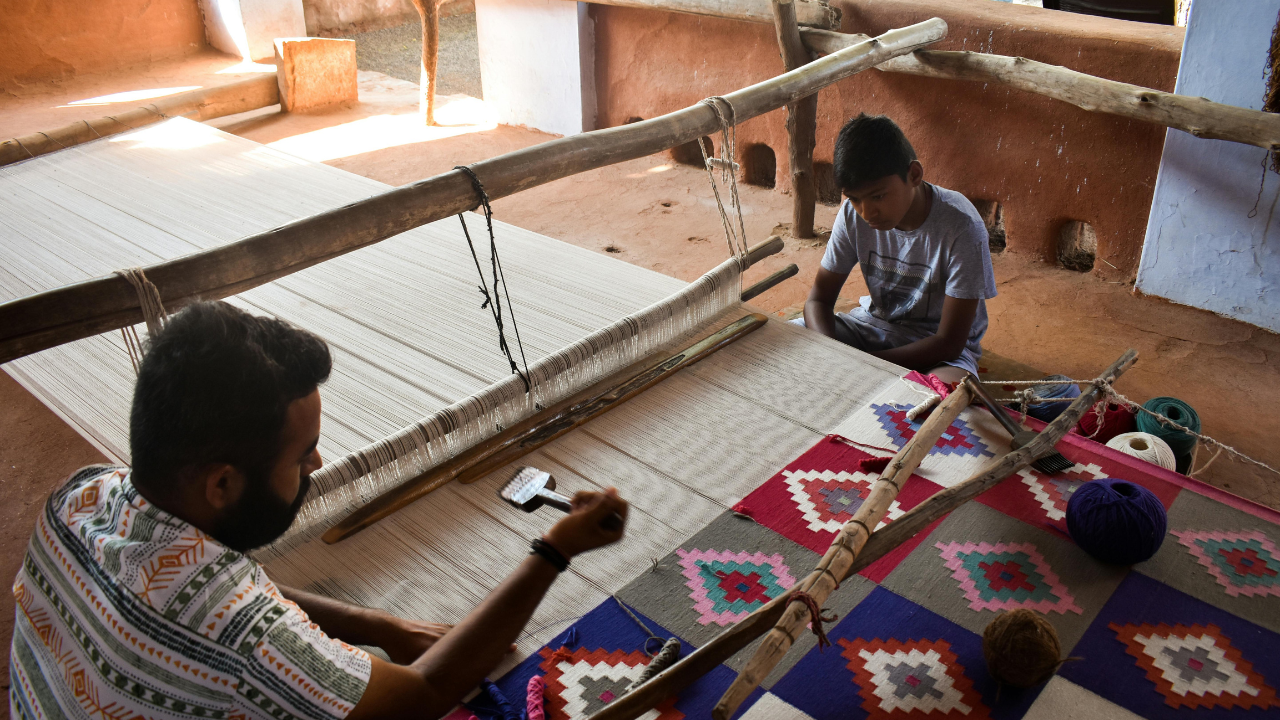
Photo: Canva
As reported by The Indian Express, Sahoo specialises in weaving 80s single-count cotton sarees and Lio silk shirting. His work includes the traditional single-count Patta design, locally known as Chiadifoda. The technique requires artisans to create intricate motifs by inserting extra weft threads individually by hand. Before weaving begins, fine cotton yarn is strengthened with rice starch, then wound, warped and prepared for the loom.During the weaving process, thin wooden sticks are used to lift selected warp threads. This allows the weaver to insert threads at specific points and form the required patterns. The sarees feature traditional motifs, geometric designs and temple borders. The use of 80s single-count cotton yarn gives the fabric a lightweight, smooth and breathable finish. Sahoo has also developed a colour-dobby border incorporating a traditional fish motif, combining a familiar design element with the technical demands of the craft.A specially made 80s single-count colour-dobby border Patta saree measures 6.20 metres, including the blouse piece, and is 1.22 metres wide. It takes around 30 days, including preparatory work, to complete and is priced at Rs 12,599.The time involved in making each saree is one reason the craft needs skilled workers and sustained training. Sahoo believes that younger generations must learn the technique if it is to survive competition from machine-made textiles.
How a cooperative helps weavers earn
Sahoo is associated with the Netaji Weavers Cooperative Society Ltd in Dodunda Singipur. The cooperative supplies raw materials to weavers and purchases their finished sarees and shirting, paying them labour charges. The products are then supplied to organisations and buyers, including the State Agency for Development of Handloom Clusters, Boyanika and Sambalpuri Bastralaya.This arrangement allows artisans to work without having to invest their own money in yarn and other raw materials. Sahoo earns around Rs 20,000 to Rs 25,000 a month through weaving. He also earns approximately Rs 20,000 by training rural women and young people.The handloom tradition has a wider presence in the region. Nearly 300 weavers are associated with it in villages such as Sidhal, Dodunda Singipur and Jaitota, as well as nearby areas. Sahoo’s training programmes are intended to bring more people into the profession and pass on the skills required to produce different designs.
Training women and young people to earn through weaving
Sahoo’s training programmes have reached beyond Jagatsinghpur district, extending to Boudh, Nabarangpur, Koraput, Gunupur, Athagarh, Dhenkanal and Kendrapara. The six-month programmes offer practical instruction in basic weaving and jalla dobby techniques. More than 200 unemployed women and young people have received training, learning to make sarees and shirting in different designs.Rupashree Behera of Odisso village belongs to a weaving family but said she had little practical knowledge of the craft before joining Sahoo’s programme. As reported by The New Indian Express, the training helped her learn to weave sarees and shirting in different designs. She now earns between Rs 10,000 and Rs 12,000 a month.
National recognition for his contribution to handloom
Sahoo’s work received national recognition when he was conferred the National Handloom Award 2025. The award was presented by President Droupadi Murmu during the 12th National Handloom Day celebrations in New Delhi on August 7, 2026. The award recognises his craftsmanship and contribution to the handloom sector. Sahoo believes that awards alone cannot secure the future of traditional weaving. He has called for more training opportunities, exhibitions, public awareness and stronger market connections so that artisans can earn better and younger people see weaving as a practical career.After 45 years at the loom, Sahoo continues to work towards both goals: keeping a distinctive handloom technique in practice and teaching others how to make a living from it.