







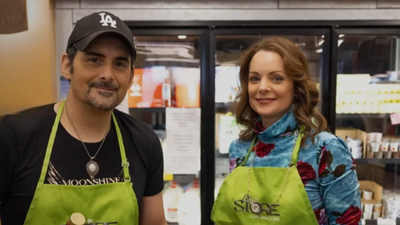
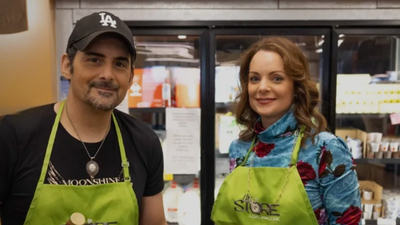
In August 2024, country music star Brad Paisley and his wife, actor Kimberly Williams-Paisley, pledged the first $1 million towards a $5 million campaign to open a second location of their nonprofit grocery store in Nashville, Tennessee. The new site opened on January 14, 2026, at TriStar Centennial Medical Center, allowing eligible families to select groceries without paying. Reports by Southern Living, TriStar Health and local broadcaster WSMV document the expansion, which aims to help more people facing food insecurity while preserving their dignity and freedom of choice.The store, called The Store, was co-founded by the couple and first opened in March 2020 on the campus of Belmont University, Paisley’s alma mater. Unlike a conventional food pantry, where people may receive pre-packed food boxes, it operates like a grocery store. Referred families can choose from fresh produce, meat, dairy products and pantry staples according to their needs and dietary preferences.The model is designed to make receiving food assistance feel less like accepting a handout and more like an ordinary shopping experience. The organisation works through referrals from nonprofit and government agencies, and its assistance is intended to help people through periods of financial difficulty as they work towards greater stability.
From one store to a second location
The idea behind The Store emerged after the Paisleys volunteered with their two sons at Unity Shoppe, a free supermarket in Santa Barbara, California. The experience helped the family understand how community support could provide essential goods while treating people with dignity, according to the organisation’s account of its origins.The couple subsequently partnered with Belmont University to establish a similar initiative in Nashville. The original store opened on March 12, 2020, just days after a devastating tornado outbreak struck the area and shortly before the Covid-19 pandemic disrupted normal operations. The organisation adapted during the early months of the pandemic, offering curbside collection and home delivery, particularly for older people. It continued developing its services as the needs of local families became clearer.By August 2024, the Paisleys announced plans for a second location in partnership with TriStar Centennial Medical Center. The new site was planned for the ground level of the hospital’s B Garage at 311 23rd Avenue North in Nashville. The expansion campaign aimed to raise $5 million to fund construction and operations, with the couple committing the first $1 million.The partnership also connected food assistance with healthcare. TriStar Centennial’s leadership said some hospital staff had been spending their own money to help patients obtain food and clothing. The new arrangement was intended to create a more organised way to connect people experiencing food insecurity with assistance close to the hospital.
Why the expansion mattered
The second store was designed to increase the nonprofit’s capacity at a time when demand was rising. WSMV reported in January 2026 that the original location had served 2,200 families in 2025 and had developed a substantially longer waiting list. The broadcaster also reported a 40% increase in families facing food insecurity over the preceding year, citing the local situation as a key reason for the expansion.The new store is nearly three times the size of the original location, according to reporting around its opening. Its larger footprint provides additional room for grocery shopping, storage and volunteers, while the location is expected to allow the organisation to serve more than twice as many families as before.The second site also offers emergency clothing, extending assistance beyond food. The organisation’s broader services include support such as counselling, nutrition education, cooking classes and financial planning. These programmes are intended to help shoppers manage immediate needs while working towards longer-term stability.The new location officially opened on January 14, 2026, with Paisley and Williams-Paisley joining hospital and city leaders for a ribbon-cutting ceremony. The opening allowed the nonprofit to begin reaching people who had been waiting for assistance through the original Belmont University site.
Dignity and choice at the centre
For the Paisleys, the purpose of the project extends beyond providing groceries. The Store’s model lets shoppers make their own selections rather than receive identical food packages, allowing households to choose items that fit their circumstances. That distinction can matter for families with different dietary requirements, children, older relatives or limited cooking facilities. Access to fresh food, meat and dairy also broadens the choices available to shoppers.The organisation relies on donations, staff and volunteers to keep the stores operating. It reported that more than 3,100 volunteers supported its work in 2025, helping stock shelves, assist shoppers and run year-round programmes. With the second location open, it said it would need around 275 volunteers each week.The expansion does not mean the need for assistance has disappeared. Local reporting indicated that the waiting list had grown as demand increased, even before the new store began operating. The larger site is intended to increase capacity, but the organisation continues to depend on donations and volunteers to maintain its services.The $1 million pledge in 2024 was therefore the beginning of a wider community effort, rather than the sole funding source for the project. By combining the couple’s contribution with other donations and a partnership with TriStar Centennial, The Store opened a second site in 2026, extending a grocery model built around free food, personal choice and the dignity of families seeking help.