






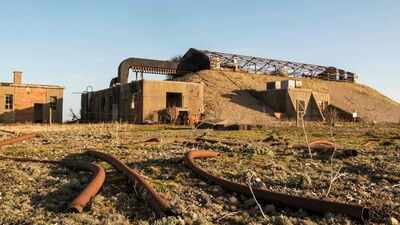
Orford Ness, a remote stretch of the Suffolk coast in eastern England, holds a combination of military history and protected wildlife. Covering more than 2,000 acres, the shingle spit was once a closely guarded testing ground where British researchers worked on aircraft, radar and nuclear weapons technology. Today, its landscape contains abandoned concrete laboratories, former airfield marshes and fragile coastal habitats supporting birds, hares and deer. According to the National Trust, which now manages the nature reserve, the site offers a rare opportunity to explore how decades of secret military activity shaped this landscape.
How did Orford Ness become a secret weapons testing site
Orford Ness was not always a military installation. As the National Trust explains, salt marshes developed behind the growing shingle spit during medieval times, eventually providing grazing land for local communities. Walls were built around parts of the marshes to control tidal water, while sheep and cattle continued to graze there for centuries.The area’s strategic importance also grew from its coastal position. Suffolk’s beaches and deep estuaries made the region potentially vulnerable to invasion, and the nearby coastline was involved in military preparations during earlier conflicts.The decisive change came in 1913, when the War Department purchased a large part of Orford Ness before acquiring the entire site soon afterwards. The National Trust records that the land became a military testing ground, with access restricted to protect the work taking place there.Between 1913 and 1916, sections of King’s Marsh were drained and levelled to create airfields. The first aircraft arrived in 1915, marking the beginning of decades of military experimentation. History Hits’ account of Orford Ness also describes how the isolated location made it suitable for closely guarded projects during both world wars and the Cold War.
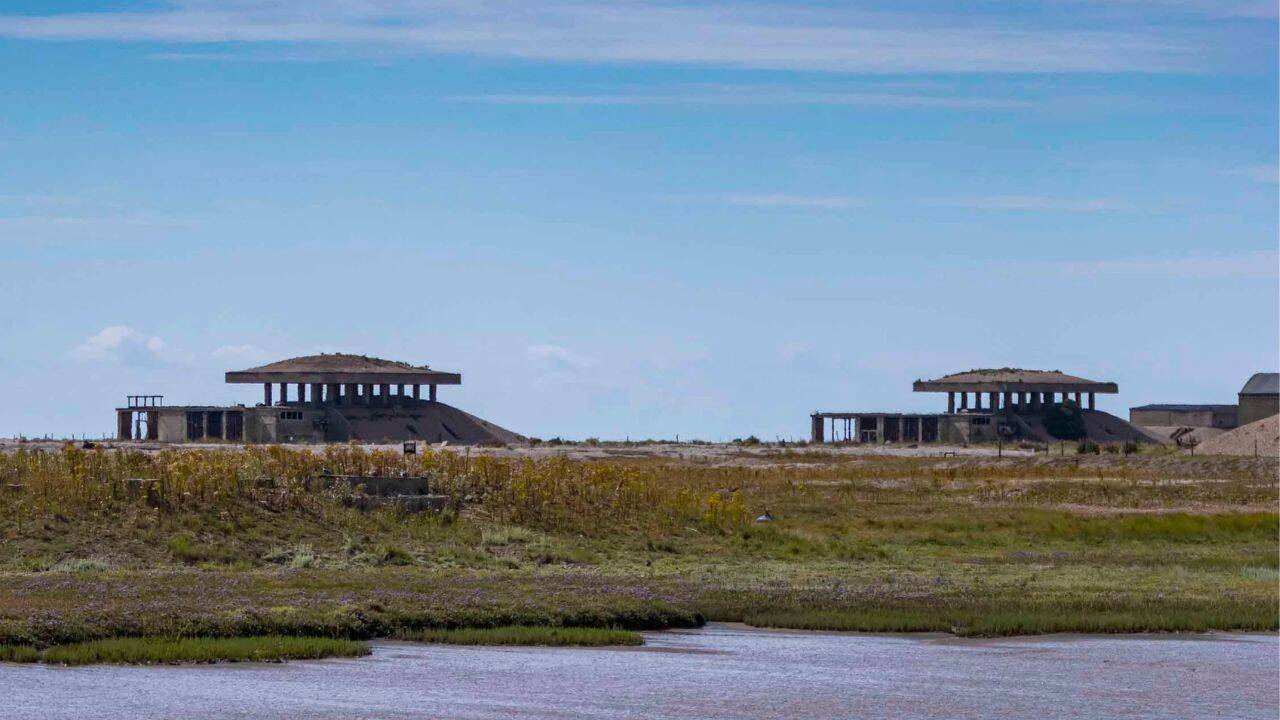
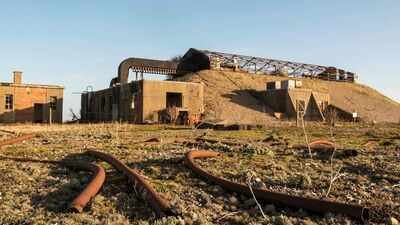
The abandoned Pagodas, nuclear testing buildings at Orford Ness. Image Credit: National Trust Images/Chris Lacey
What experiments took place behind the fences
The testing programme expanded well beyond aircraft operations. According to the National Trust’s history, the site became an important centre for experiments involving aircraft performance, weapons and military detection systems.One notable structure is the Bomb Ballistics building, completed in 1933. Researchers used specialist equipment there to record the flight of bombs, helping them understand how bombs travelled through the air and improve the calculations used for aiming. The work continued for more than four decades, with later developments contributing to research associated with atomic weapons.Orford Ness also played a significant role in the development of radar. In 1935, Robert Watson-Watt and his team arrived to establish what was presented as an ionospheric research station. The National Trust explains that this was a cover for work on an aerial defence system that became known as radar.Other experiments examined how vulnerable aircraft and their components were to attacks. Between 1938 and 1959, controlled firing trials tested the effects of projectiles on aircraft, fuel tanks, oxygen tanks and engines. During the 1950s, the marshes were also used to study the flight paths of air-launched rockets.These activities left behind buildings and infrastructure that still reveal the site’s former purpose, even though much of the work was conducted under strict secrecy.
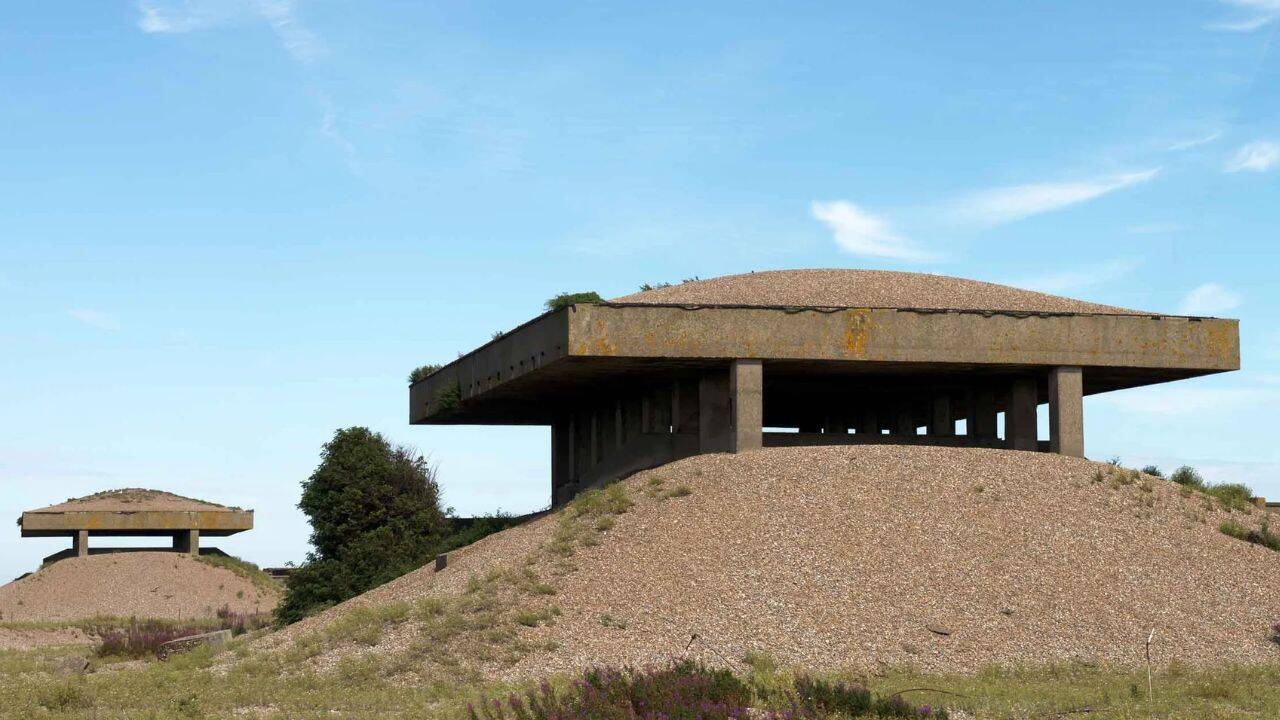
Image Credit: National Trust Images/John Millar
The concrete labs preserve a remarkable military legacy
Among the most striking remains are the buildings commonly known as the Pagodas. These concrete structures were built for atomic weapons research and testing, giving the landscape an appearance quite unlike that of a conventional nature reserve.The National Trust’s history of Orford Ness describes the establishment of 6 specialised test cells by the Atomic Weapons Research Establishment, which was based at Aldermaston. Laboratory 1, completed in 1956, was used for mechanical and vibration testing, as well as drop tests. These facilities allowed researchers to examine how components behaved under different conditions.The National Trust explains that the former Control Room, also built in 1956, initially served Laboratory 1 before being adapted for the Hard Target Impact facility. Although the Control Room is no longer open to the public, it remains a reminder of the protective measures built into the research site.Another structure is the Black Beacon, completed in 1928. Its apparent purpose was to house a marine navigation beacon, but the National Trust explains that it actually accommodated equipment intended to help military aircraft find their way. The Bomb Ballistics building and the former Radar Receiver building provide further evidence of the wide range of experiments conducted on the Ness.History Hit reports that the atomic weapons establishment ceased work at the site in 1971. However, the landscape did not simply lose its historical significance when the experiments ended.
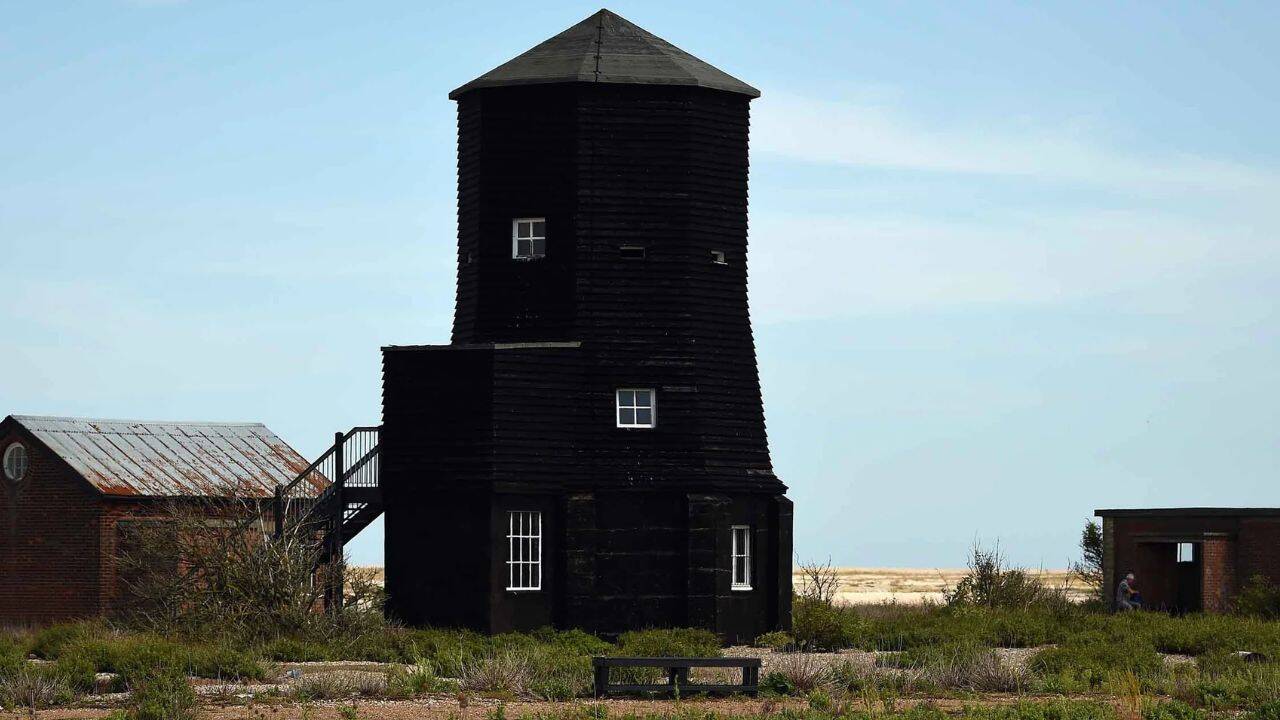
The Black Beacon at Orford Ness. Image Credit: National Trust Images/John Millar
Why has wildlife returned to the former military landscape
Orford Ness is now recognised for its ecological importance as well as its history. The National Trust describes it as an internationally significant coastal nature reserve, with more than 10 miles of coastline and over 2,000 acres of land.The area is particularly notable for its vegetated shingle, a rare habitat formed when the sea deposits stones into ridges and valleys over long periods. According to the National Trust, around 20% of Europe’s vegetated shingle is found at Orford Ness. This fragile environment takes centuries to develop, and even a misplaced footstep can damage its delicate structures.Beyond the shingle, coastal grazing marshes and wetlands provide habitats for a variety of wildlife. The National Trust identifies wetland and wading birds, Chinese water deer and hares among the animals found across the reserve. Former airfield land has also become grazing marsh.Orford Museum describes the Ness as a remote wildlife haven and highlights its connection with Havergate Island and the wider Alde-Ore estuary.The contrast is particularly striking because the military buildings remain visible within the landscape.

A Hare at the Oxford Ness National Nature reserve. Image Credit: National Trust images/Justin Minns
The reserve now combines conservation with historical discovery
The National Trust took ownership of Orford Ness after its military use ended, bringing a new purpose to a place that had remained inaccessible to the public for decades. Its work now includes managing habitats, protecting the fragile shingle landscape and helping visitors understand the site’s history.Visitors can explore designated walking routes through the former airfield, marshes and coastal habitats. The National Trust’s structures guide describes the Red Route, which follows former airfield areas before crossing towards the vegetated shingle. Other routes open seasonally to protect breeding birds.The former Radar Receiver and NAAFI building now houses the Island of Secrets exhibition. According to the National Trust, it explores the site’s military research from the First World War through to the Cold War, including accounts from people who worked there. A decommissioned atomic bomb is also part of the display.Access remains carefully managed. The National Trust states that visitors must cross the River Ore on its ferry, Octavia, rather than reaching the reserve directly on foot or by road. Some trails are closed during parts of the breeding season to protect wildlife.
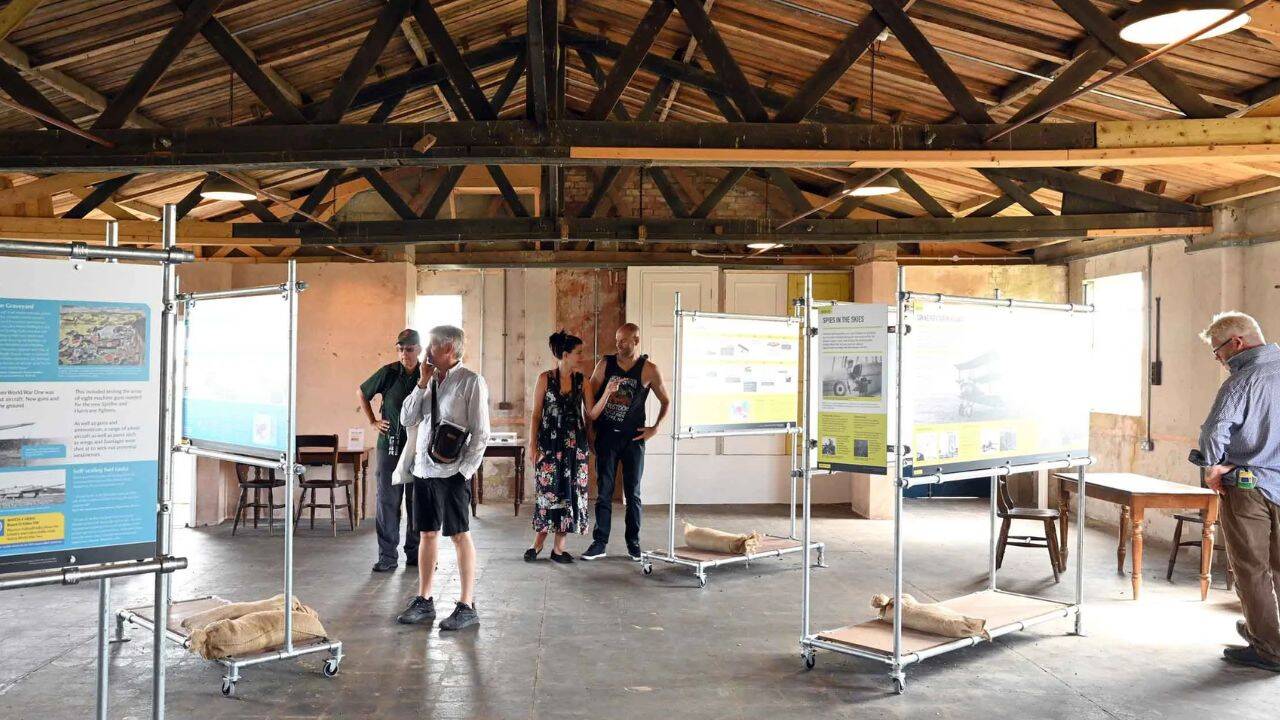
The Island of Secrets exhibition at Orford Ness Image Credit: National Trust Images/John Millar