









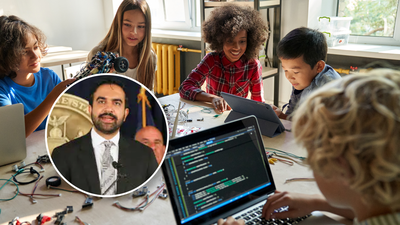
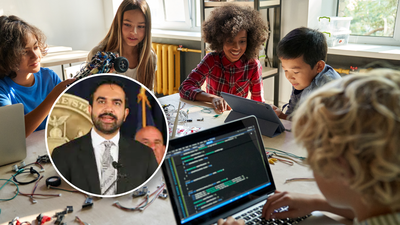
For many parents, AI has quickly become part of everyday childhood. Children use chatbots to explain difficult homework, brainstorm ideas, write stories, solve math problems and, sometimes, simply answer questions they are too shy to ask an adult. But a new decision in New York City is raising an uncomfortable question for parents everywhere: Are children getting access to AI before they are ready for it?New York City has announced a one-year moratorium on the use of artificial intelligence by students in public elementary and middle schools, affecting around 600,000 children.
28 Jul 2026 | 16:25
Do you think social media has changed the parent-teen relationship?
Mayor Zohran Mamdani said the policy was aimed at protecting the human side of children’s education. “Children need teachers and human connection in order to learn and grow. They need to develop skills alongside their peers, build relationships with educators and wrestle with tough problems on their own,” Mamdani said at a press conference, according to Reuters.The policy is among the most restrictive AI measures introduced by a US school district so far. It suspends the use of about 40 AI-based educational tools currently used in schools, per Reuters. The restrictions apply through eighth grade, while high school students can use AI only in certain approved situations. Teachers, however, can continue using AI for lesson planning and administrative work.The move comes as schools and families around the world are still trying to figure out where AI belongs in a child’s education.Mayor Zohran Mamdani has argued that younger children need human connection, interaction with teachers and classmates, and direct engagement with learning rather than becoming dependent on technology too early. New York’s broader rules also restrict individual screen use for children up to third grade, recommend a 45-minute daily screen limit for middle school students and prohibit AI-powered companion chatbots designed to provide emotional or mental support at all grade levels.For parents, however, the question is not simply whether AI is “good” or “bad”. It is how, when and why a child is using it.
Why are parents worried about AI becoming a shortcut?
‘Children need teachers and human connection,’ says Mamdani
Imagine a child struggling with a school assignment. Instead of sitting with the problem, looking through a textbook or asking a teacher, they type the question into an AI chatbot and receive an answer within seconds.The homework gets finished. But something else may have been lost- the struggle that helps a child learn. Children do not just learn from getting the right answer. They learn by making mistakes, asking questions, changing their approach and sometimes sitting with a problem longer than they would like.That is why unrestricted AI use can become tricky. If a child begins treating a chatbot as the first step for every difficult task, the technology can quietly shift from being a learning aid to becoming a replacement for thinking.
AI can be useful- but parents need to set the boundaries
This does not mean parents need to keep AI completely away from children. Used thoughtfully, AI can be an interesting educational tool. A child can ask it to explain a complicated concept in simpler language, generate practice questions, suggest ideas for a story or help them understand where they went wrong in a maths problem.The important distinction is between using AI to learn and using AI to avoid learning. A useful rule for parents could be: Ask your child to think first, AI second. Let them attempt the problem before turning to a chatbot. If they use AI, ask them to explain the answer afterwards in their own words. That small change can make the child an active participant rather than a passive recipient.