







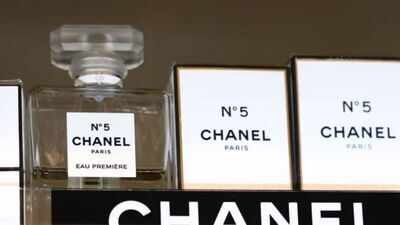
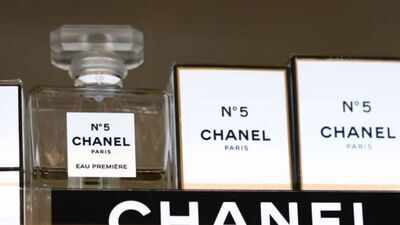
In the ever-changing world of fashion, brands are no longer flying high with a revolving door of identities and collections. They are trying to settle down into the minds of their customers by picking a niche. While one uses organic methods as their power, another highlights their own legacy to remain in the game.When it comes to luxury houses like Chanel, there is one thing that quickly comes to mind, it’s perfume, Chanel No. 5. A fragrance that the brand and customer claim has not changed since it was launched almost a century ago. But the world’s most recognisable fragrance depends on a set of flowers grown in the south of France by one family for generations.
A familial farm
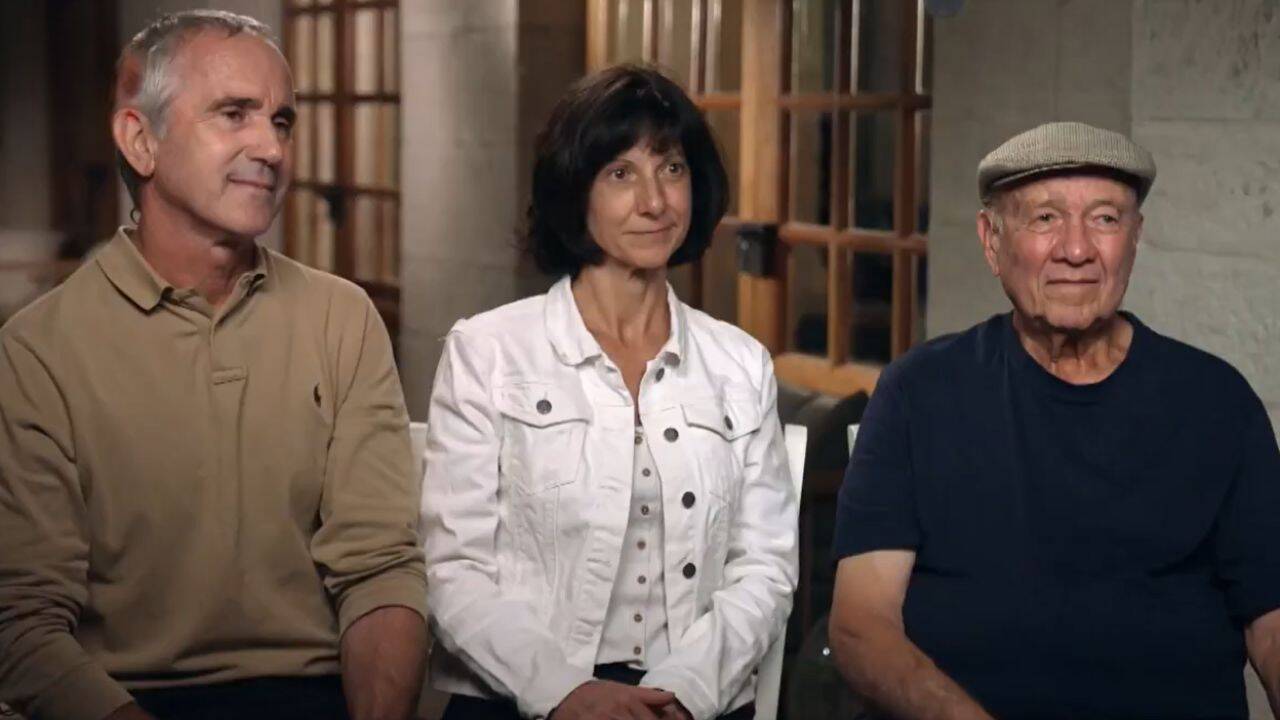
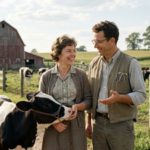
Joseph Mul with his familyImage source: X
For more than a century, one family has been growing the flowers that make up Chanel No. 5. In the field of Grasse, France, six generations of the Mul family have helped preserve the perfume’s signature scent, while also adapting their craft for their future. Aptly known as Le Petit Campadieu, or The Little Camp of God, the soil here yields the May Rose, which gives the iconic fragrance its rich, honey scent.“I have always been involved in all the crops my parents, grandparents and great-grandparents grew,” said Joseph Mul, a fourth-generation family member of the farm to WSJ. Today, three generations of the family still work the land together.“I started working at the farm in 1957. It started with my great-great-grandfather in the 1840s. In the generation after mine, my whole family works with us,” he said.In the fifth generation. Joseph’s son-in-law Fabrice Bianchi works with him along with his granddaughter, Marika Bianchi. “For me it wasn’t so obvious to join the family business. I went into consulting which was a very different job and I didn’t really like it, so I wanted to come back. Since I was young, I was with my parents, grandparents, and my sisters. We were always in the field. I didn’t really see the job as a job, it was actually just a natural environment where we grew,” she said.

Another lineage runs parallel to the Muls, that of the fragrance’s perfumer Olivia Polge.
Another lineage runs parallel to the Muls, that of the fragrance’s perfumer Olivia Polge. “My father’s role was that he was my predecessor, so he was Chanel’s creator of perfumes from the late 70s to 2013 when I joined Chanel. My father was the first perfumer at Chanel who had to tell the story and describe the style of perfume we have been creating,” said Olivier Polge, a second-generation member of the family. Polge seemed destined to be a perfumer, but resisted at first. His father, Jacques, was Chanel’s in-house perfumer for 37 years before the younger Polge took up the role, and created some of Chanel’s most beloved fragrances, among them Coco, Coco Mademoiselle, Allure, and Chance. He had his own tremendous successes before joining the brand, creating widely known and commercially successful fragrances including Viktor & Rolf Flowerbomb, and Dior Homme.In the 1970s, much of the production in Grasse began to shut down or move abroad due to the real estate pressure. The conditions worried Chanel who questioned if it would be able to maintain the quality of Chanel No. 5 and whether the women who wore it would notice if parts of the formula changed. The Muls ensured their future and that of Chanel No. 5 by officially partnering together. “And if we are here, it’s because Chanel wanted to preserve the quality of the essences that go into their perfumes,” said Joseph.
What goes into Chanel No. 5?
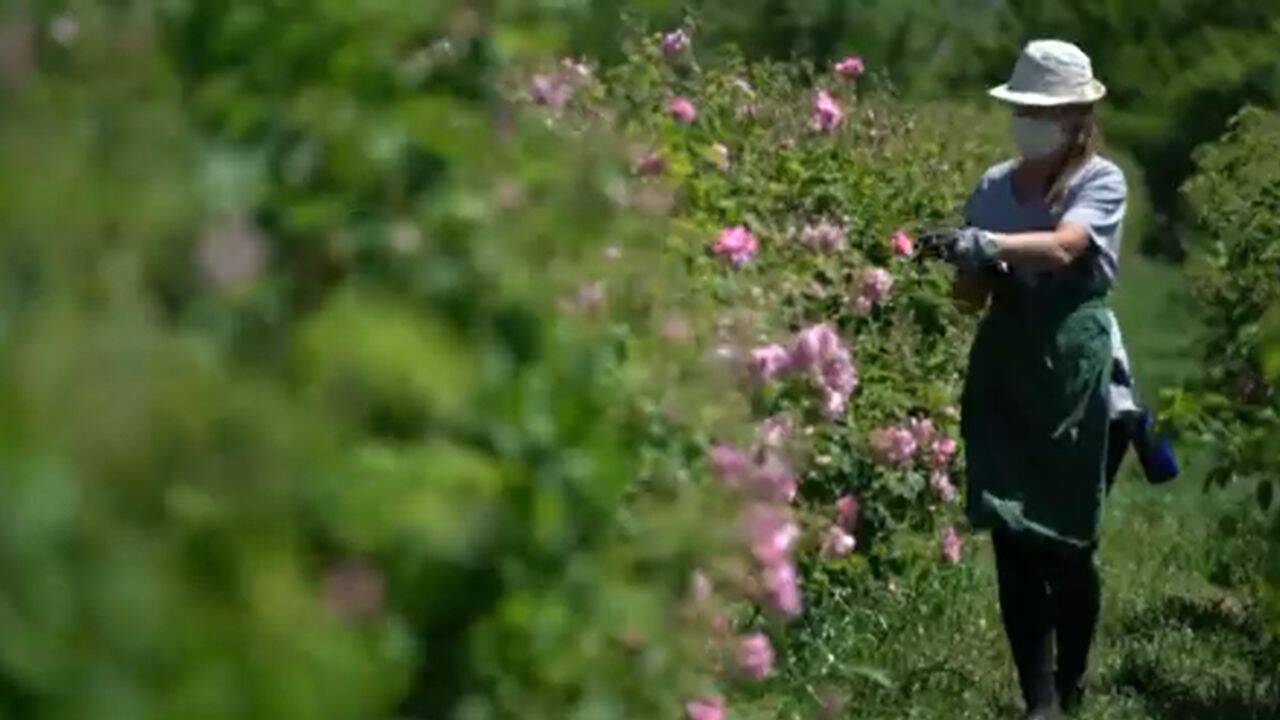
To create the fragrance a combination of flowers is required, namely, rose, jasmine and ylang ylang.
Chanel No. 5 was launched in 1921 as a collaboration between Coco Chanel and perfumer Ernest Beaux. “Gabrielle Chanel had this intuition that today seems obvious for us,” said Olivier Polge, Chanel’s in-house perfume creator to Forbes. “She felt she had to express her style through perfumes; she’s the one who had the idea that those two could be connected. So, she made this perfume and asked him to use the most beautiful raw materials. The flowers are precious because they are very hard to harvest; the yield is very low. And the scent itself is very complex. With the techniques we have today, we are able to recognise several hundred different molecules.”To create the fragrance a combination of flowers is required, namely, rose, jasmine and ylang ylang. The rose centifolia which is in No. 5 is a rose that is very rich, and that we also extract captures the more sensuous side of the rose, with honey undertones, velvety texture and it brings a richness, a sensuality to No.5. Each November and December, the bulbs are removed from the soil to protect them from the cold, cleaned off, separated into smaller pieces and dried. In April, they are reacclimatised to ambient temperature and replanted in rows of six, but won’t flower for a year or two. When they finally flower, they are harvested in the cool of the early morning by hand, and placed in burlap bags before being sent for weighing and extraction of their unique fragrance.A process that extracts the most potent fragrance follows, where petals are loaded into stacked circular trays, then dipped three times into a vat of special solvent. That solvent is then evaporated, leaving a scented wax called “concrete.” Afterwards, the wax is transformed into a concentrated liquid essence named “absolute.” It usually takes up to 400 kilograms of roses to make just one kilogram of concrete. This very concentrated wax is further processed, whittling it down to a mere 600 grams of the rose absolute that lies at the base of every CHANEL N°5 perfume bottle.Ninety per cent of the jasmine in the region is grown on Mul’s family farm along with the rose and other flowers on a field spanning 30 hectares. There are over 200 species of jasmine, and Jasminum grandiflorum is cultivated for Chanel. “It has olfactive differences,” Polge added in the 2023 interview. “It’s much more rare. It’s incredible because it’s difficult to harvest jasmine here, but the jasmine from other places in the world is beautiful as well. From a creative standpoint, you have to be very careful to have a wide range of options to express your creativity. It is very delicate; there is a green tea note that makes it recognisable.”In Grasse, the jasmine harvest lasts from August to October. The flower blooms at night and is picked in the early morning. Each gatherer picks 350 grams of flowers per hour, and one kilogram of jasmine represents 8,000 flowers. Since it’s so fragile, picking the flower correctly to preserve it is an art. “Pick with both hands at the same time,” Joseph Mul advised. After a handful is gathered, they are placed in wicker baskets, as that material allows air to circulate. Once the basket is three-quarters full, a damp cloth is placed over the flowers to protect them.Next, they are taken to the on-site factory, which was built in 1987, where they are weighed within three hours of picking, since immediate processing results in better quality. Then comes the extraction process, essentially a bath in which the flowers are immersed at a high temperature in metal crates in a solvent that soaks up all of their scent. The water is changed three times and the flowers are sent to compost. Once the solvent has evaporated, the scent is captured in a super-fragrant wax called a concrete; 350 kilograms of jasmine are needed to produce one kilogram of concrete. Next, the absolute is procured by separating the alcohol from the fragrant substance, and that extremely concentrated liquid is used in the Chanel No. 5 parfum formulas. One kilogram of concrete yields 550 grams of jasmine absolute.“In one little bottle of N°5 Parfum, there are over one thousand flowers. … It’s a little world in and of itself,” said Polge.