








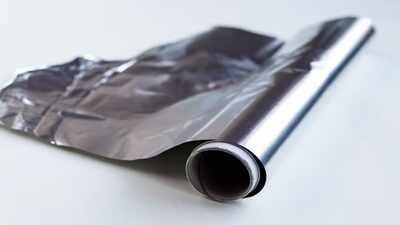
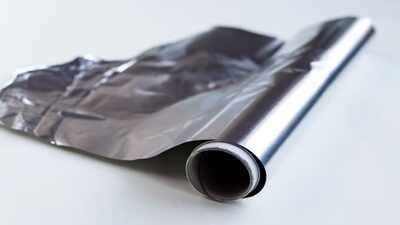
Aluminium foil is made by rolling large sheets of metal into thin pieces. The rolling process is done multiple times until the metal reaches a thickness of less than 0.02 mm. According to the European Aluminium Association, the metal reaches a point where it is too thin and can tear during the final rolling stages.The manufacturers then roll two sheets of metal together. In this process, the outer part of the metal is in contact with polished steel rollers smoothing and polishing the surface. The inner part of the metal which is in contact with another sheet does not get polished; hence, the dull side.
Why the two sides are different
The difference between the two sides is purely physical. There is no chemical difference between the shiny and dull side of aluminium foil. According to the Aluminium Association, the shiny side has more reflected light compared to the dull side.Researchers have established that the reflected percentage from smooth surfaces can be higher than 80%. Rough surfaces have lower percentage of reflected light compared to smooth surfaces. On the other hand, both sides have similar composition and thickness;
Does it matter which side you use?
Research and consumer reports by the US Department of Agriculture reveal that there is no significant difference between the two sides. However, both sides conduct heat at the same rate since they are made of aluminium and have the same thickness.Moreover, the thermal conductivity of aluminium allows even distribution of heat, especially when grilling and roasting food. Any significant difference in heat conductivity would be noticeable when using different grades or gauges of the metal.
When it may matter
The difference between the two sides of aluminium foil may be noticeable in certain cases. For instance, some companies manufacture non-stick aluminium foil with a dull side. It is advisable to place food on the non-stick side of the foil.On the other hand, the shiny side may come in handy when dealing with technical or laboratory procedures. The shiny side has higher heat reflection compared to the dull side. According to various manufacturers, the dull and shiny sides only differ when dealing with specific applications.
What the manufacturers say
Most aluminium foil manufacturers acknowledge that there is no significant difference between the two sides. As mentioned earlier, the differences are physical, and the two sides conduct heat at the same rate. Unless dealing with specific applications, such as those mentioned above, it should make no difference which side you use on a daily basis.