









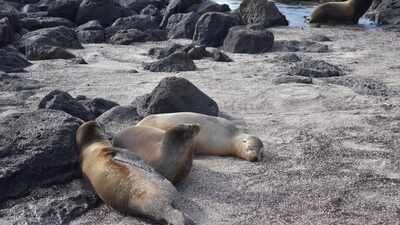
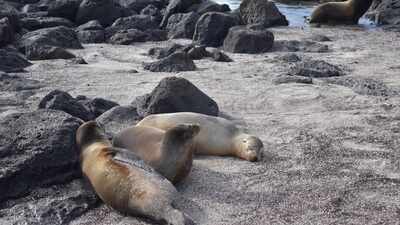
Can you imagine reaching a beach and finding all the beach chairs occupied not by visitors but by sea lions? In most parts of the world, you would ask them to get out of your way, but in the Galápagos Islands of Ecuador, the animals remain and people patiently wait. This is one of the many instances in which life on the Galápagos Islands shows how wildlife comes first.“Wildlife comes first” is not a traditional practice but rather one of the world’s best conservation mechanisms, in which the protection of the native species is considered more important than any other thing.
Legal framework for wildlife coming first
The Galápagos Islands, situated about 1,000 kilometers off the Pacific coast of Ecuador, are a UNESCO World Heritage Site and home to hundreds of unique species in the world. The high biological diversity of the islands makes it necessary for Ecuador to create legal protections.Almost 97% of the islands’ surface area has been declared Galápagos National Park while the surrounding waters form the Galápagos Marine Reserve which happens to be one of the biggest marine reserves around the globe.According to the constitution of Ecuador, nature too enjoys the status of having certain legal rights. These “Rights of Nature” were established in 2008 and recognize the right of ecosystems to survive and recover their well-being.
Why sea lions get the best places
The Galápagos sea lion has emerged as the unofficial mascot of these islands. These sea lions sleep on docks, park benches, boats, sidewalks and even lounge chairs at hotels.They should not be disturbed by any means. It is compulsory according to the laws of the park to keep a distance from wildlife and disturb or feed the animals. A business never tries to disturb the sleeping sea lion but waits for it to move off.The courtesy is shown even to marine iguanas, giant tortoises, blue-footed boobies, and other native animals that frequently cross through towns and streets.
In case of hitting an iguana
The killing of a marine iguana or giant tortoise is taken seriously in the Galápagos Islands. Motorists are required to drive cautiously when they see any native wildlife, particularly during the nesting season and migration seasons. In case the animal is injured, the park rangers are notified in order to treat the wildlife. The killing of wildlife could lead to investigations to see whether any negligence is committed.This response shows the conservationist nature of the islands instead of emotional responses to individual animals.
Unconventional visiting rules
Conservation of Galápagos involves adhering to unique guidelines such as:* Sticking to designated paths.* Maintaining a distance of at least two meters from any animal.* Not touching and feeding animals.* Not carrying plant seeds, fruits, or other materials which might cause invasive species.* Obeying instructions by certified naturalist guides in conservation sites.This is done to avoid the spread of diseases and minimize stress of animals which have developed without any human fear.
Importance of these laws
Charles Darwin was inspired by the Galápagos Islands on his legendary voyage in 1835 on HMS Beagle. It is through his observations of the unique wildlife in the islands that he formulated the theory of natural selection.Currently, some of the species are threatened by climate change, pollution, overfishing, and the introduction of alien species due to human actions. The giant tortoises, marine iguanas, and several bird species in the islands have had to be put under conservation to save them.Priority to the protection of wildlife has been identified as one of the reasons why the Galápagos Islands are among the world’s well-conserved natural ecosystem.
An environment where humans adapt, not vice versa
Unlike other destinations where animals are expected to stay away from humans, the Galápagos Islands have a different situation. This means that whether a sea lion takes a chair, a tortoise blocks cars, and even when an iguana crosses the road, the people have to accommodate. It seems strange, but in the extraordinary islands, accommodating the wildlife is actually a law.